Welcome to The Binocular and Telescope Shop
Main menu
-
Telescopes
- Telescopes
-
Types of Telescopes
-
Celestron Telescope
-
Smart Telescopes
-
Saxon Telescopes
-
Skywatcher Telescopes
-
TeleVue Telescopes
-
Planewave Telescopes
-
Vixen Telescopes
-
TEC Telescopes
-
BORG Telescopes
-
Founder Optics
-
Solar Astronomy
-
Binoculars
- Binoculars
-
Types of Binoculars
-
Vortex Binoculars
-
Nikon Binoculars
-
Swarovski Binoculars
-
Leica Binoculars
-
ZEISS Binoculars
-
Fujinon Binoculars
-
Gerber Binoculars
-
Vixen Binoculars
-
Pentax Binoculars
-
Olympus Binoculars
-
Kite Optics
-
Kowa Binoculars
-
GPO Binoculars
-
Zerotech Binoculars
-
Binocular Accessories
-
Spotting Scopes
- Spotting Scopes
-
ZEISS Spotting Scopes
-
Swarovski Spotting Scopes
-
Leica Spotting Scopes
-
Nikon Spotting Scopes
-
Vortex Spotting Scopes
-
Kowa Spotting Scopes
-
Pentax Spotting Scopes
-
Celestron Spotting Scopes
-
Spotting Scope Accessories
-
Microscopes
- Microscopes
-
Beaver Labs Microscopes
-
Celestron Microscopes
-
Digital Microscopes
-
Microscopes for Children
-
Biological Microscopes
-
Mounts & Tripods
- Mounts & Tripods
-
ZWO Mounts
-
Celestron EQ Mounts
-
iOptron Mounts
-
Vixen Mounts
-
Paramount EQ Mount
-
Saxon Mounts
-
PlaneWave Mounts
-
Skywatcher EQ Mounts
-
Losmandy EQ Mounts
-
Camera Tripods
-
Astro Star Tracker Mounts
-
Mount Accessories
-
Imaging
- Imaging
-
ZWO Cameras
-
QHY Cameras
-
Starlight Xpress
-
FLI Cameras
-
Atik Cameras
-
Pegasus Astro
-
Camera Lenses
-
SBIG Cameras
-
Focusing
-
Imaging Accessories
-
Filters (Imaging)
-
Autoguiding
-
Accessories
- Accessories
-
Eyepieces, Diagonals and Barlows
-
Adapters & Extensions
-
Books & Sky Guides
-
Bags, Cases & Covers
-
Cleaning and Maintanence
-
Collimation
-
Dew Control
-
Dovetail Bars & Plates
-
Filters (Visual)
-
Finderscopes
-
Tube Rings
-
Tele Vue Eyepieces
-
Bintel Eyepieces
-
Celestron Eyepieces
-
Vixen Eyepieces
-
Barlows & Powermates
-
Saxon Eyepieces
-
Eyepiece Kits
-
Diagonals
-
Tools
Your cart
Choose your Location
-
Bintel Glebe
Usually ready for pickup in 24 hours
Bintel 84 Wentworth park road, Glebe, 2073, NSW
Phone:(02) 9518 7255
Hours:
Monday9:30 am–5:30 pm
Tuesday9:30 am–5:30 pm
Wednesday9:30 am–5:30 pm
Thursday9:30 am–5:30 pm
Friday9:30 am–5:30 pm
Saturday9:30 am–4 pm
SundayClosed
平面波望远镜
19 products
19 products
Sort by:
- 特色
- 最相关
- 畅销
- 按字母顺序排序,A-Z
- 按字母顺序排序,Z-A
- 价格,从低到高
- 价格,从高到低
- 日期,从旧到新
- 日期,从新到旧
$68,999.00
PlaneWave 20 英寸 CDK(校正 Dall-Kirkham)光学设计是一种创新解决方案,以实惠的价格提供无与伦比的天文成像质量。CDK 望远镜设计使用大尺寸 CCD 相机提供出色的成像效果,同时仍保持出色的视觉使用效果。CDK 设计的离轴性能远远超过大多数商用望远镜设计,包括 Ritchey-Chrétien 设计。这种不折不扣的设计独特之处在于使光学对准变得容易,准直变得非常简单。这确保了用户从望远镜中获得最佳性能。CDK 设计的图像平面的最终结果是没有离轴彗差、没有离轴散光、完全平坦的视场(没有离轴散焦)。CDK 设计将为您提供从视场中心到角落的精确恒星。有关我们的光学设计的更多信息
PlaneWave Instruments CDK20 是一款 20 英寸(0.51 米)f/6.8 校正 Dall-Kirkham 天文望远镜。CDK20 采用双碳纤维桁架设计,配有 3 个冷却风扇,从望远镜后部排出空气。CDK20 覆盖 52 毫米视野,无任何场曲、离轴彗形像差或像散。该仪器重量为 140 磅(64 千克),标配背板固定环,可随时安装您选择的调焦器。
所有 CDK20 望远镜均配备 熔融石英主镜和次镜
特征:
| 碳纤维桁架设计 | 最大限度地减少因温度变化而导致焦点偏移的热膨胀 | |
| 燕尾伸缩接头 | 考虑到碳纤维和铝之间的热膨胀差异。伸缩接头允许铝制燕尾榫膨胀和收缩,而不会对碳纤维下桁架造成压力 | |
| 冷却风扇 | 三个冷却风扇从光学管中吹出,将空气拉过望远镜并穿过主镜。这有助于望远镜快速达到热平衡。如果购买可选的电子调焦附件 (EFA 套件),风扇由计算机控制。 | |
| Delta-T 就绪 | 为了增强防露效果,CDK20 内部连接有聚酰亚胺薄膜加热垫和温度传感器,可通过可选的Delta-T 控制器进行控制。 |
光学系统
| 光圈 | 20 英寸(508 毫米) |
| 焦距 | 3454 毫米(135.98 英寸) |
| 焦距比 | 光圈/6.8 |
| 中央阻塞 | 主镜直径的 39% |
| 调焦架上的后焦 | 5.8 英寸(147 毫米) |
| 重量 | 140 磅(63.5 千克) |
| OTA 长度 | 47 英寸(1,194 毫米) |
| 上笼 | 碳纤维桁架 |
| 下笼 | 碳纤维桁架与碳纤维灯罩 |
次镜
| 直径 | 7.5 英寸(191 毫米) |
| 材料 | 熔融石英 |
| 形状 | 球形 |
| 涂层 | 增强铝 - 96% |
主镜
| 光学直径 | 20 英寸(508 毫米) |
| 外径 | 20.5 英寸(521 毫米) |
| 形状 | 长椭圆体 |
| 材料 | 熔融石英 |
| 涂层 | 增强铝 - 96% |
镜头组
| 直径 | 90 毫米(3.54 英寸) |
| 镜头数量 | 2 |
| 涂层 | 宽带增透膜(400 至 700nm 范围内反射率低于 0.5%) |
船运
| 板条箱运输重量 | 291 磅(132.0 千克) |
| 板条箱宽度 | 33 英寸(838 毫米) |
| 板条箱高度 | 40 英寸(1,016 毫米) |
| 板条箱长度 | 65 英寸(1,651 毫米) |
包含的配件
| Ronchi 垫片(200354) | 该垫片位于调焦器的位置,用于设置主镜与副镜之间的间距。其内径为 1.25 英寸,可与 1.25 英寸目镜配合使用,以进行准直。 |
| 朗奇眼科 | 该目镜是一个 Ronchi 屏幕,用于设置主镜和副镜的间距。 |
| 主镜盖 | 主镜盖保护主镜。 |
| 印刷版说明书 | 用于准直和间距 |
注意:本产品交货期较长。如需更多详细信息,请发送电子邮件至: education@bintel.com.au
$117,999.00
成功推出 DeltaRho 350 后,DeltaRho 500 现已推出,可克服超广角成像的挑战。主镜固定到位,只需简单调整副镜的倾斜度和倾斜度,即可快速实现准直。由于 PlaneWave 追求完美的望远镜,其聚光能力是 DeltaRho 350 的两倍多,最大限度地提高天文照相仪的性能从未如此简单!
- 修正卡塞格林焦点光学设计
- 孔径 – 508 毫米 (20″)
- 焦距 – 1537 毫米
- 焦距比 – f /3.03
- 70mm 像圈 > 2.6 度
- 固定主镜
- 通过副镜上的 3 个倾斜螺钉进行准直
- 距安装表面 9.166 英寸(232.8 毫米)(不含调焦器和旋转器)。
- 安装 Series-5XL 调焦器和 Series-5 旋转器后,后焦距为 5.81 英寸 (147.6 毫米)(调焦器位于行程范围的中间点)。
- 内置主、辅除露加热器,配有温度传感器
- 与 L-500 或 600 系列直接驱动支架兼容。
PlaneWave 团队热衷于设计卓越的望远镜,以便世界各地的用户能够捕捉到最令人惊叹的天文图像。从设计到制造,DeltaRho 500 的目标都是围绕创造革命性的广角望远镜。DeltaRho 500 采用卡塞格林光学设计,成像列车位于望远镜后部,以防止仪器受阻。与主焦点设计相比,这具有真正的优势,主焦点设计会严重限制用户使用滤光轮或大型相机的能力。DeltaRho 500 以 f/3 和 1537 毫米焦距运行,见证望远镜技术的惊人突破,这必将彻底改变您的天文摄影。
最后,但并非最不重要的一点是,DeltaRho 500 提供了平坦的视野,可确保从角落到角落的图像都具有令人惊叹的清晰度,而不会降低场曲率。DeltaRho 500 提供单镜准直的简便性、先进 3D 打印挡板的杂散光控制以及通过有限元分析 (FEA) 创建的结构性能。使用大型 16803/4040 (52mm) 尺寸的相机传感器时,DeltaRho 500 用户可以从边缘到边缘体验精确的星星和 2 度视野。这个视野是我们 CDK 20 的两倍多!这种设备让用户体验到全新水平的广角成像,可以让他们比以往任何时候都更接近深空。DeltaRho 500 让用户和令人惊叹的天文图像之间没有任何障碍。
碳纤维管设计
最大限度地减少热膨胀,避免成像过程中温度变化导致焦点偏移。碳纤维还能快速达到环境温度,而且重量极轻且坚硬,有助于确保生成出色的成像数据。
准直软件
与附带的准直掩模一起,PlaneWave 准直软件可以快速轻松地进行准直,从而最大程度地提高快速 f 比光学系统的性能。
3D 打印挡板
PlaneWave 的数字 3D 打印技术在我们的挡板系统中添加了连续的材料层,从而实现了轻量、精确定位的内部杂散光控制,从而最大限度地减少渐晕并最大限度地提高图像对比度。
冷却风扇
三个风扇巧妙地安装在光学管的背板上,以便通过望远镜和主镜通风。光学管侧面的四个附加风扇为主镜提供气流,有效地实现热平衡,以防止因温度变化而导致图像失真。
风扇通过 PWI 4 软件进行控制,PlaneWave 5 系列控制器单独出售。
防露控制
为了增强防露效果,DR500 内部连接有聚酰亚胺薄膜加热垫和温度传感器,可通过 PWI 4 软件使用 5 系列控制器进行控制。
光学系统
| 光学设计 | 修正卡塞格林 |
| 光圈 | 508 毫米(20 英寸) |
| 焦距 | 1537 毫米(60.5 英寸) |
| 焦距比 | f/3 |
| 中央阻塞 | 59%(按直径) |
| 安装表面的后焦距(未安装调焦器/旋转器) | 距安装表面 9.166 英寸 (232.8 毫米);距镜头盒 7.271 英寸 (184.7 毫米) |
| 重量 | 165 磅(75 千克) |
| OTA 长度 | 35.1 英寸(892 毫米) |
| 光学设计性能(光斑直径) | 轴上 3.86 微米 RMS、轴外 22 毫米处 4.04 微米 RMS、轴外 35 毫米处 6.04 微米 RMS(光斑直径) |
| 望远镜笼 | 碳纤维桁架杆,带碳纤维罩 |
| 最佳视野 | 70mm 像圈 |
主镜
| 光学直径 | 20 英寸(508 毫米) |
| 外径 | 20.8 英寸(528 毫米) |
| 形状 | 长椭圆体 |
| 材料 | 熔融石英(石英) |
| 涂层 | 增强铝 – 96% |
次镜
| 直径 | 286 毫米(11.26 英寸) |
| 材料 | 熔融石英(石英) |
| 形状 | 球形 |
| 涂层 | 增强铝 – 96% |
镜头组
| 直径 | 最大镜头:160 毫米(6.3 英寸) |
| 镜头数量 | 三 |
| 涂层 | 宽带增透膜(400 至 700 nm 范围内平均反射率小于 0.5%) |
包含物品
| 防结露加热元件 | 主镜和副镜上的加热垫需要 5 系列控制器(单独出售)。 |
| OTA封面 | 它可以保护主镜和光学管内部。 |
| 闪存盘 | 包含用于准直和间隔主镜和次镜的软件和说明。 |
| 扳手套装 (5812A35) | 标准六角扳手(仅限欧洲订单) |
配置
对于 DeltaRho 500 和 Series-5XL 调焦器:
为了获得适当的机械间隙,需要使用0.5 英寸垫片 (#6003165)。
如果用户计划使用我们的调焦器和旋转器,则将 0.5 英寸垫片放置在调焦器和旋转器之间,然后放置倾斜适配器。
如果用户计划仅使用调焦器,则 0.5 英寸垫片的组装方式如下:OTA、调焦器、垫片,然后是倾斜适配器。
倾斜适配器与 Series-5XL 调焦器兼容,因为调焦器和倾斜配件均使用 7.125 英寸法兰接口。
推荐配件
安装配件
- L-500 直接驱动安装座 (600550)
影像配件
- 适用于 5 系列调焦器或旋转器的倾斜适配器,可连接至 SecureFit (6061006)
OTA 配件
- 适用于 7.125 英寸法兰接口的 0.5 英寸延伸垫片 (6003165)
- 背驮式燕尾杆 (201990)
- 系列-5XL 调焦器 (6071001)
- 5 系列旋转器 (6021001)
- 5系列控制器(600199)
$38,000.00
多年来,我们一直梦想着打造出一款完美的广角成像望远镜,而 PlaneWave 革命性的 DeltaRho 350 f /3 望远镜终于实现了我们对创新的追求。DeltaRho 350 专为无与伦比的广角成像和现场易用性而设计。由于主镜固定到位,因此只需调整副镜的倾斜度和倾斜度即可快速实现准直。有了 Delta Rho 350,您的天文摄影体验将无与伦比!
- 修正卡塞格林焦点光学设计
- 孔径 – 350 毫米
- 焦距 – 1050 毫米
- 焦距比 – f /3
- 60mm 像圈 > 3 度
- 固定主镜
- 通过副镜上的 3 个倾斜螺钉进行准直
- 距安装表面(不含调焦器和旋转器)的后焦距为 5.651 英寸(143.535 毫米)。此距离包括来自滤光片的折射。
- 安装 5 系列调焦器和 5 系列旋转器后,后焦距为 2.525 英寸 (64.135 毫米)(调焦器位于行程范围的中间点)。
- 内置主、辅除露加热器,配有温度传感器
- *产品照片中的 L-350 支架单独出售
拍摄最令人惊叹的天文照片是我们团队所热衷的事情。从设计到制造,我们对 DeltaRho 350 的目标都是打造一款改变游戏规则的广角望远镜。DeltaRho 350 采用卡塞格林光学设计,这意味着成像列车固定在望远镜的背面,不会阻挡光路,而主焦点设计会严重限制用户使用滤光轮或大型相机的能力。
DeltaRho 350 是望远镜技术和易用性方面的一项惊人突破。DeltaRho 以 f/3 和 1050 毫米焦距运行,是一款广角望远镜,必将彻底改变您的天文摄影!
此外,DeltaRho 350 提供了完美的平坦视野,因此您的天文照片从图像的角落到角落都将具有惊人的清晰度,而场曲率不会降低照片的质量。DeltaRho 350 是一款出色的望远镜,它具有单镜准直的简便性、高级挡板的杂散光控制、通过有限元分析 (FEA) 创建的结构性能以及数十年的望远镜设计经验。使用大型 16803/4040 尺寸相机传感器时,DeltaRho 350 用户可以从边到边体验精确的星星和 170 x 170 弧分的视野。这个视野几乎是我们 CDK14 的 3 倍!当设备淡入背景并简单地运行时,天文摄影体验变得更加有趣和有益!
光学系统
| 光学设计 | 修正的 Dall-Kirkham (CDK) |
| 光圈 | 350 毫米 |
| 焦距 | 1050毫米(41.34英寸) |
| 焦距比 | f / 3 |
次镜
| 直径 | 7.48 英寸(190 毫米) |
| 材料 | 熔融石英(石英) |
| 形状 | 球形 |
| 涂层 | 增强铝 – 96% |
主镜
| 光学直径 | 13.78 英寸(350 毫米) |
| 外径 | 14.5 英寸(468.3 毫米) |
| 形状 | 长椭圆体 |
| 材料 | 熔融石英(石英) |
镜头组
| 直径 | 110 毫米(4.33 英寸) |
| 镜头数量 | 三 |
| 涂层 | 宽带增透膜(400 至 700nm 范围内反射率低于 0.5%) |
标准功能
| 修正卡塞格林 | 校正后的设计可产生没有离轴像散、彗形像差和场曲的平坦场。 |
| 碳纤维桁架设计 | 最大限度地减少因温度变化而引起的焦点偏移的热膨胀。 |
| 燕尾伸缩接头 | 考虑到碳纤维和铝之间的热膨胀差异。伸缩接头允许铝制燕尾榫膨胀和收缩,而不会对碳纤维下桁架造成压力 |
| 冷却风扇 | 三个冷却风扇将空气吹入望远镜后部。这有助于望远镜快速达到热平衡。如果购买可选的电子调焦附件 (EFA 套件),风扇将由计算机控制。 |
| Delta-T 就绪 | 为了增强防露效果,DR350 内部连接有聚酰亚胺薄膜加热垫和温度传感器,可通过可选的 Delta-T 控制器进行控制。 |
船运
| 板条箱运输重量 | 225磅 | 102 公斤 |
| 板条箱宽度 | 31英寸 | 787.4 毫米 |
| 板条箱高度 | 26英寸 | 660.4 毫米 |
| 板条箱长度 | 53英寸 | 1346.2 毫米 |
包含物品
| 防结露加热元件 | 主镜和副镜上的加热垫需要单独出售的 5 系列控制器 |
| OTA封面 | 保护主镜和光学管内部 |
| 闪存盘 | 包含主镜与次镜准直和间隔的软件和说明 |
| 扳手套装 (5812A35) | 标准六角扳手(仅限欧洲订单) |
推荐配件
OTA 配件
- 5 系列调焦器 (6011001)
- 5 系列旋转器 (6021001)
- 5系列控制器(600199)
安装配件
- L-350 直接驱动安装座 (600549)
- DeltaRho 350 背驮式燕尾槽 (140990)
影像配件
- 适用于 5 系列调焦器或旋转器的倾斜适配器,可连接至 SecureFit (6061006)
$9,869.00
The fast SCT, reinvented.
8 inches. f/2.8. Carry-on weight.
The Observable Space FSCT8 is the first native f/2.8 Schmidt-Cassegrain ever built in an 8-inch form factor. A 42 mm image circle, fused silica quartz mirrors, and a 267 mm carbon-fibre OTA under 9 kg — designed from the optical axis out for astrophotographers who demand observatory results without the observatory.
Every clear night is too short. The FSCT8 makes sure you get the most out of every hour of it.
f/2.8 native. The SCT form factor finally fast.
A conventional 8-inch SCT runs at f/10. The FSCT8 runs at f/2.8 natively — no reducer stacks, no optical compromises. That is a 13-fold increase in photon-gathering speed. A four-hour integration target becomes roughly 20 minutes of effective exposure. For imagers working under Australian skies with limited clear nights, this is the most impactful single step up possible.
mm fully illuminated image circle. Sharp stars across the entire field at under 6.2 μm RMS — covering APS-C and most medium-format sensors with no vignetting.
Quartz mirrors. Focus doesn’t move.
Primary (210 mm) and secondary (114 mm) mirrors are both fused silica quartz — the same glass used in research-grade observatories. Near-zero thermal expansion means the focus point does not drift as temperature drops. Your collimation is still correct at 3 am.
267 mm OTA. Fits where full-size SCTs don’t.
The carbon-fibre upper cage is rigid, thermally stable, and keeps total OTA length at just 267 mm. That is shorter than many refractors. It mounts on mid-range equatorial platforms and travels as carry-on — without sacrificing the optical performance of a full 8-inch system.
Flat field. Corner to corner. No caveats.
The 88 mm broadband AR-coated corrector lens flattens the focal plane and holds sub-6.2 μm RMS optical performance across the full 42 mm image circle — from dead-centre to the corner of a full APS-C sensor.
Your full imaging train. No extensions required.
A 100 mm back focus from the mounting surface accommodates camera, filter wheel, electronic focuser, and off-axis guider without extension tubes. The 2.75 μm per arcsecond image scale is matched to modern small-pixel CMOS sensors — making the most of every pixel in the frame.
Purpose-built for imaging. Not retrofitted for it.
Observable Space — the PlaneWave and OurSky collaboration — built the FSCT8 as an imaging instrument from the ground up. Mirror material, corrector geometry, tube construction, back focus distance: every decision serves the astrophotographer. This is not a visual SCT with a reducer bolted on. It is a dedicated astrograph that fits in a carry-on bag.
8-inch aperture. Mid-range mount. Dark-sky remote site. All viable.
At under 9 kg and just 267 mm OTA length, the FSCT8 is mountable on equatorial platforms that a conventional 8-inch SCT with reducer stack would overload. It travels as carry-on, sets up in minutes, and puts professional-grade optical performance within reach of any dark-sky site — no permanent observatory required.
NGC 6992. The Eastern Veil Nebula.
Supernova remnant in Cygnus. Delicate filamentary emission structure that demands long exposures from slower systems resolves here in a fraction of the integration time — f/2.8 working exactly as intended.
M97. The Owl Nebula.
Planetary nebula in Ursa Major, approximately 2,600 light years distant. Extended shell structure and the characteristic owl-eye cavities resolved in a single night — a target that a slow system would need multiple sessions to match.
More signal per hour. Every clear night finally worth the effort.
Native f/2.8 focal ratio — the first fast SCT in an 8-inch system, designed for wide-field deep-sky imaging from the optical axis out
42 mm fully illuminated image circle with optical performance under 6.2 μm RMS across the full field — sharp stars edge to edge
Fused silica (optical-grade quartz) primary (210 mm) and secondary (114 mm) mirrors with enhanced aluminium coatings for temperature stability
Carbon-fibre upper cage construction — 267 mm OTA, under 9 kg total weight for use on mid-range to high-end imaging mounts
88 mm broadband AR-coated corrector lens delivers a flat focal plane and 2.75 μm per arcsecond image scale suited to modern CMOS sensors
100 mm back focus from mounting surface — accommodates cameras, filter wheels, and electronic focusers in a standard imaging train
4°+ field of view with a 42 mm sensor — ideal for large emission nebulae, galaxy groups, and all-sky survey programmes
An Observable Space instrument — the merger of PlaneWave precision optics engineering and OurSky imaging systems expertise, purpose-built for the astrophotographer
Every number that matters.
The fast SCT, reimagined. Backed by Australia’s telescope authority.
$15,049.00
f/2.75.
What used to take a week now takes a night.
The DeltaRho 280 Argus is PlaneWave’s observatory-class wide-field astrograph for serious imagers and sky-survey programmes. Fused silica quartz mirrors, a carbon fibre OTA, and a 55 mm image circle at f/2.75 — 280 mm of aperture that turns nights of integration into a few productive hours.
f/2.75 is not just fast. It is the difference between finishing a target tonight and coming back next month.
13× faster than f/10. Every photon counts more.
At f/2.75, the DeltaRho 280 gathers light 13 times faster than an f/10 instrument of identical aperture. That is not an incremental advantage — it is the difference between a productive one-hour session and a week of cloud-interrupted integration. Research programmes and sky surveys that would otherwise take months become achievable in a single season.
mm image circle — large enough to cover full-frame sensors and beyond, with sharp stars from centre to corner at 4.5 μm RMS or better at 27.5 mm off-axis.
Focus stays locked. All night.
Primary and secondary mirrors are optical-grade fused silica quartz — near-zero thermal expansion, the same material used in premier research observatories. As temperature drops through the night, conventional glass mirrors shift focus. The DR280’s quartz mirrors do not.
Stiff where it matters. Light where it counts.
Carbon fibre delivers exceptional torsional rigidity with minimal mass. At 14.5 kg for a 451 mm OTA, the DR280 is a 280 mm instrument that mounts on observatory-class and high-end portable mounts alike — without needing a counterweight upgrade.
Sensor alignment without shimming or guesswork.
The integrated tip-tilt focal plane adjuster lets you dial in perfect sensor tilt with precision — no shims, no trial-and-error. It is consistent, repeatable, and done in minutes at the start of any session.
The Heart Nebula. In one frame.
The 770.6 mm focal length paired with the 55 mm image circle delivers over 4 degrees of field of view. Large nebula complexes, galaxy groups, and wide-field targets that require mosaics on narrow-field systems fit comfortably into a single frame — or anchor a multi-panel survey.
Dew control built in. Session-ending fog, ruled out.
Integrated dew control heater technology keeps the optical path clear on humid Australian nights. One less cable to run, one less failure point — the DR280 keeps imaging when lesser rigs fog out and call it a night.
Collimation solved. From first session to thousandth.
The DeltaRho 280 ships with PlaneWave’s collimation software that walks you through mirror alignment step by step — no iterative star-testing, no guesswork. Set it once: the rigid carbon fibre structure holds alignment through the night. The low-profile focuser delivers 0.5 inches of travel from a 163 mm back focus distance, giving your imaging train room to breathe.
M51. The Whirlpool Galaxy.
Galaxy arms, tidal bridges, and foreground stars resolved in a single short session. At f/2.75, integration time that would fill a week on a slower system compresses to a few productive hours.
IC 1805. The Heart Nebula.
H-alpha, RGB narrowband composite. The 4-degree–plus field captures the Heart Nebula’s full complex and surrounding star-forming regions in a single pointing — a target that demands a mosaic from slower, narrower systems.
Built for imagers who treat every clear night as a resource. Nothing wasted.
280 mm (11″) aperture with fused silica (quartz) primary and secondary mirrors for temperature-stable performance
f/2.75 focal ratio — 13 times faster than f/10, reducing required integration time dramatically
55 mm image circle at 4.0 μm RMS on-axis and 4.5 μm RMS at the full 27.5 mm off-axis radius
Integrated tip-tilt focal plane adjuster for precise sensor alignment without physical shimming
Carbon fibre optical tube — 451 mm OTA, 14.5 kg total weight for use on observatory-class mounts
Built-in dew control heater and broadband AR coatings (<1% reflection, 400–800 nm) for consistent all-weather performance
4°+ field of view capability with a 55 mm sensor — ideal for large nebula complexes and sky surveys
Compatible with PlaneWave L350 Direct Drive Mount — designed as an integrated professional imaging system
Every number that matters.
Professional imaging. Backed by Australia’s telescope authority.
$111,570.00
The CDK500 Observatory System from PlaneWave Instruments is a sophisticated solution designed for the serious astrophotographer and dedicated astronomy researcher. This high-end system combines the powerful CDK20 optical tube with the precise L-500 direct-drive mount, creating an exceptional observational platform that excels in a variety of scientific and imaging applications.
Key Features of the CDK500 Observatory System
CDK20 Optical Tube Assembly
- Advanced Optical Design: Employs a Corrected Dall-Kirkham optical design, achieving a field free of off-axis coma and astigmatism and a perfectly flat field across a 52 mm image circle, resulting in critically sharp images over the entire viewing area.
- High-Quality Construction: Constructed with robust carbon fiber, reducing thermal expansion and enabling quick thermal equilibration, which helps maintain precise optical alignment under fluctuating temperatures.
- Superior Mirrors and Coatings: Equipped with high-stability fused silica mirrors known for minimal thermal expansion, paired with high-performance coatings that maximize light throughput while minimizing stray light for optimal imaging quality.
- Thermal Management: Incorporates an advanced cooling system with strategically placed fans that ensure rapid thermal stabilization, essential for maintaining consistent, high-quality imaging and minimizing focus shifts caused by temperature changes.
CDK20 f/6.8 OTA
- Aperture and Focal Length: Features a 20-inch aperture, a shorter 3454 mm focal length at a faster f/6.8 focal ratio, and a shorter back focus of 223 mm.
CDK20 f/7.7 OTA
- Aperture and Focal Length: Features a 20-inch aperture, a longer 3947mm focal length at an f/7.7 focal ratio, and a longer 269.24 mm back focus.
L-500 Direct Drive Mount
- Direct Drive Motors: Features state-of-the-art direct-drive motors on each axis, providing smooth, fast, and virtually silent movement of the telescope with zero backlash and zero periodic error, perfect for precise tracking and rapid repositioning of celestial objects.
- High-Resolution Encoders: Outfitted with high-resolution optical encoders on both axes, offering precise positioning and movement, which is crucial for elite astrophotography and detailed astronomical studies.
- Azimuth Dovetail Balance System: Includes a finely adjustable balance system that enhances the stability and performance of the setup in both alt-azimuth and equatorial configurations, essential for prolonged accurate tracking and reducing stress on the mount during extended observations.
- Rapid Target Acquisition: Capable of impressive slew speeds up to 50 degrees per second, allowing for quick and efficient targeting of celestial bodies and satellites, vital for dynamic observations and responsive astrophotography.
Application-Specific Advantages
Astrophotography
The CDK500 is a formidable system for astrophotographers, offering unmatched tracking accuracy and image stability, which facilitate capturing spectacular celestial images with detailed resolution and vibrant colors.
Astronomy Research
Researchers will find the CDK500 invaluable for its consistent performance and precise data collection capabilities. It serves as a robust platform for sophisticated photometry, spectroscopy, and minor planet tracking, offering a solid foundation for scientific discovery and exploration.
Visual Observations
For enthusiasts of visual astronomy, the CDK500 provides vibrant and detailed views of the universe. Its significant aperture and high-quality optical components ensure exceptional viewing of planetary, lunar, and deep-sky objects, enriching every observational experience.
Space Situational Awareness (SSA) and Space Domain Awareness (SDA)
With its swift and precise repositioning capabilities, the L-500 mount in the CDK500 system is capable of tracking satellites and space debris. However, it's important to note that while the L-series mounts are highly effective for astrophotography and research applications, they might not meet the optimal performance standards required for dedicated SSA/SDA operations. For those needs, we recommend exploring our T-600 Direct-Drive Gimbal, specifically engineered to exceed the demanding requirements for SSA/SDA applications, ensuring superior tracking and responsiveness in monitoring and cataloging space objects.
Mount systems
| Mount Weight | 257 lbs (100 kg) |
| Max. Load Capacity | 200 lbs (91 kg) |
| Latitude Range | 0 to 90 degrees, Northern and Southern hemispheres |
| Cable Management | Equipment cables can be wired through mount |
Control systems
| Control Electronics | PlaneWave Interface dual axis telescope control |
| User Interface | PlaneWave Interface 4 (PWI4) Control Software with integrated PointXP mount modeling software |
| Homing Sensors | Home position sensors are included allowing the mount can find its home position on power up. |
| Slew Rate | 20 degrees per second (standard); 50 degrees per second (maximum), both axes |
| Power Requirement | Accepts 120 VAC. Supplied with 12VDC 15A Regulated Power Adapter |
Optical systems
| Aperture | 508 mm (20") |
| Focal Length | 3454 mm (135.98") or 3947 mm (155.4") |
| Focal Ratio | f/6.8 or f/7.77 |
| Central Obstruction | 39% of the Primary Mirror Diameter |
| Back Focus | f/6.8 - 223 mm (8.81 in), f/7.77 - 269.24 mm (10.6") |
Mechanical structure
| Fork Assembly | L-500 Mount |
| Fork Base | Welded stainless steel torsion box |
| Optical Tube | Carbon Fiber Truss with Carbon Fiber Light Shroud |
| Instrument Payload | 200 lbs (91 kg) |
Motion control
| Motor – Azimuth and Altitude | Direct Drive 3 Phase Axial-Flux Torque Motors |
| Encoder – Azimuth and Altitude | 152mm stainless steel encoder ring with reader built into the azimuth and altitude axes. 18,880,000 counts per revolution (0.069 arcsecond resolution). |
| Motor Torque | Approximately 20 ft-lbs continuous; 50 ft-lbs peak |
| Drive Electronics | Industrial grade, off-the-shelf brushless motor drives for each axis with custom designed interface card |
| Telescope Control Software | PlaneWave Interface (PWI4). Incorporates PointXP mount modeling software by Dave Rowe. Provides HTTP and ASCOM control interfaces. MaxIm DL is required for camera control when building a pointing model within our PWI4 software. |
System Performance
| Pointing Accuracy | <10 arcsecond RMS with PointXP Model |
| Pointing Precision | 2 arcseconds at sidereal velocity |
| Tracking Accuracy | 0.3 arcseconds over a 5-minute period at sidereal velocity |
| System Natural Frequency | 11 Hz or greater |
Induced items
| Included Items | Dovetail Saddle (200919) - The PW wide saddle comes standard with the L-500 mount. |
| Heating Elements for Dew Prevention - The heating pads on the primary and secondary mirror require the 600195 Delta-T controller sold separately | |
| OTA Cover - To protect the primary mirror and inside of the optical tube | |
| Flashdrive - Contains PWI4 software for mount control , instructions for installation, software, and instructions for collimation and spacing the primary to secondary mirror | |
| Hardware - Six 1/2-13 x 1 1/4″ socket head cap screws to bolt the mount to the pier, or wedge; Six 1/2-13 washers; One extended length shoulder bolt for RA axis to EQ wedge alignment | |
| One 16′ USB cable - To connect the mount to the observatory control computer | |
| One 120VAC power cable - To provide power to the mount | |
| Standard Allen Key set - For tightening bolts used on the mount | |
| Gamepad - Used for control of the mount tracking speeds for visual observing |
$99,310.00
The CDK450 Observatory System from PlaneWave Instruments is a sophisticated solution designed for the serious astrophotographer and dedicated astronomy researcher. This high-end system combines the powerful CDK17 optical tube with the precise L-550 direct-drive mount, creating an exceptional observational platform that excels in a variety of scientific and imaging applications.
Key Features of the CDK450 Observatory System
CDK17 Optical Tube Assembly
- Advanced Optical Design: Employs a Corrected Dall-Kirkham optical design, achieving a field free of off-axis coma and astigmatism and a perfectly flat field across a 52 mm image circle, resulting in critically sharp images over the entire viewing area.
- High-Quality Construction: Constructed with robust carbon fiber, reducing thermal expansion and enabling quick thermal equilibration, which helps maintain precise optical alignment under fluctuating temperatures.
- Superior Mirrors and Coatings: Equipped with high-stability fused silica mirrors known for minimal thermal expansion, paired with high-performance coatings that maximize light throughput while minimizing stray light for optimal imaging quality.
- Thermal Management: Incorporates an advanced cooling system with strategically placed fans that ensure rapid thermal stabilization, essential for maintaining consistent, high-quality imaging and minimizing focus shifts caused by temperature changes.
CDK17 f/6.8 OTA
- Aperture and Focal Length: Features a 17-inch aperture, a shorter 3454 mm focal length at a faster f/6.8 focal ratio, and a shorter back focus of 262 mm.
L-550 Direct Drive Mount
- Direct Drive Motors: Features state-of-the-art direct-drive motors on each axis, providing smooth, fast, and virtually silent movement of the telescope with zero backlash and zero periodic error, perfect for precise tracking and rapid repositioning of celestial objects.
- High-Resolution Encoders: Outfitted with high-resolution optical encoders on both axes, offering precise positioning and movement, which is crucial for elite astrophotography and detailed astronomical studies.
- Azimuth Dovetail Balance System: Includes a finely adjustable balance system that enhances the stability and performance of the setup in both alt-azimuth and equatorial configurations, essential for prolonged accurate tracking and reducing stress on the mount during extended observations.
- Rapid Target Acquisition: Capable of impressive slew speeds up to 50 degrees per second, allowing for quick and efficient targeting of celestial bodies and satellites, vital for dynamic observations and responsive astrophotography.
Application-Specific Advantages
Astrophotography
The CDK450 is a formidable system for astrophotographers, offering unmatched tracking accuracy and image stability, which facilitate capturing spectacular celestial images with detailed resolution and vibrant colors. The L-550 carries a greater payload capacity – perfect for holding a second telescope on the outside hub.
Astronomy Research
Researchers will find the CDK450 invaluable for its consistent performance and precise data collection capabilities. It serves as a robust platform for sophisticated photometry, spectroscopy, and minor planet tracking, offering a solid foundation for scientific discovery and exploration.
Visual Observations
For enthusiasts of visual astronomy, the CDK450 provides vibrant and detailed views of the universe. Its significant aperture and high-quality optical components ensure exceptional viewing of planetary, lunar, and deep-sky objects, enriching every observational experience.
Space Situational Awareness (SSA) and Space Domain Awareness (SDA)
With its swift and precise repositioning capabilities, the L-550 mount in the CDK450 system is capable of tracking satellites and space debris. However, it's important to note that while the L-series mounts are highly effective for astrophotography and research applications, they might not meet the optimal performance standards required for dedicated SSA/SDA operations. For those needs, we recommend exploring our T-600 Direct-Drive Gimbal, specifically engineered to exceed the demanding requirements for SSA/SDA applications, ensuring superior tracking and responsiveness in monitoring and cataloging space objects.
Mount system
| Mount Weight | 338 lbs (153 kg) |
| Max. Load Capacity | 300 lbs (136 kg) |
| Latitude Range | 0 to 90 degrees, Northern and Southern hemispheres |
| Cable Management | Equipment cables can be wired through mount |
Control system
| Control Electronics | PlaneWave Interface dual axis telescope control |
| User Interface | PlaneWave Interface 4 (PWI4) Control Software with integrated PointXP mount modeling software |
| Homing Sensors | Home position sensors are included allowing the mount can find its home position on power up. |
| Slew Rate | 20 degrees per second (standard); 50 degrees per second (maximum), both axes |
| Power Requirement | Accepts 120 to 240 VAC. Supplied with 120 VAC 15A IEC Type B Regulated Power Adapter. |
Optical systems
| Aperture | 17 inch (432 mm) |
| Focal Length | 2939 mm (115.71 inch) |
| Focal Ratio | f/6.8 |
| Central Obstruction | 23.7% by surface area; 48.6% of the primary mirror diameter |
| Backfocus from Mounting Surface | 10.32 inch (262.33 mm) |
| Backfocus from Racked in Focuser | 7.24 inch (184 mm) |
| Weight | 106 lbs (48 kg) |
| Optimal Field of View | 70mm image circle |
Motion control
| Motor – Azimuth and Altitude | Direct Drive 3 Phase Axial-Flux Torque Motors |
| Encoder – Azimuth and Altitude | 152mm stainless steel encoder ring with reader built into the azimuth and altitude axes. 18,880,000 counts per revolution (0.069 arcsecond resolution). |
| Motor Torque | Approximately 20 ft-lbs continuous; 50 ft-lbs peak |
| Drive Electronics | Industrial grade, off-the-shelf brushless motor drives for each axis with custom designed interface card |
| Telescope Control Software | Uses PWI4. Incorporates PointXP mount modeling software by Dave Rowe. All ASCOM compatible. |
System Performance
| Pointing Accuracy | <10 arcsecond RMS with PointXP Model |
| Pointing Precision | 2 arcseconds at sidereal velocity |
| Tracking Accuracy | 0.3 arcseconds over a 5-minute period at sidereal velocity |
| System Natural Frequency | 10 Hz or greater |
Included Items
| Included Items | Heating elements for dew prevention - The heating pads on the primary and secondary mirror require the 600195 Delta-T controller sold separately |
| OTA Cover - To protect the primary mirror and inside of the optical tube | |
| Flash drive - Contains PWI4 software for mount control , instructions for installation, software, and instructions for collimation and spacing the primary to secondary mirror | |
| Hardware - Six 1/2-13 x 1 1/4″ socket head cap screws to bolt the mount to the pier, or wedge; Six 1/2-13 washers; One extended length shoulder bolt for RA axis to EQ wedge alignment | |
| One 16′ USB cable - To connect the mount to the observatory control computer | |
| One 120VAC power cable - To provide power to the mount | |
| Standard Allen Key set - For tightening bolts used on the mount | |
| Gamepad - Used for control of the mount tracking speeds for visual observing | |
| Dovetail Saddle (200919) - The PW wide saddle comes standard with the L-550 mount |
$85,980.00
The CDK400 Observatory System from PlaneWave Instruments is designed for the sophisticated astrophotographer and dedicated astronomy researcher. This premium package combines the high-performing CDK17 optical tube with the advanced L-500 direct-drive mount to provide a superior observational platform that excels in a range of applications, from detailed celestial research to high-end astrophotography.
Key Features of the CDK400 Observatory System
CDK17 Optical Tube Assembly
- Aperture and Focal Length: Features a 17-inch aperture and a 2939 mm focal length at an f/6.8 focal ratio, optimizing it for deep-sky imaging with excellent depth and clarity.
- Advanced Optical Design: Utilizes a Corrected Dall-Kirkham optical design, delivering a field free of off-axis coma and astigmatism and achieving a perfectly flat field across a 70 mm image circle, resulting in critically sharp images across the entire viewing area.
- High-Quality Construction: Made with lightweight yet robust carbon fiber, reducing thermal expansion and allowing for rapid thermal equilibration, which helps maintain precise optical alignment under fluctuating temperatures.
- Superior Mirrors and Coatings: Equipped with high-stability fused silica mirrors known for minimal thermal expansion, paired with high-performance coatings that maximize light throughput while minimizing stray light for optimal imaging quality.
- Thermal Management: Features an advanced cooling system with strategically placed fans that promote rapid thermal stabilization, essential for maintaining consistent high-quality imaging and minimizing focus shifts caused by temperature changes.
L-500 Direct Drive Mount
- Direct Drive Motors: Employs state-of-the-art direct-drive motors on each axis, ensuring smooth, fast, and virtually silent movement of the telescope with zero backlash and zero periodic error, perfect for precise tracking and swift repositioning of celestial objects.
- High-Resolution Encoders: Outfitted with high-resolution optical encoders on both axes, providing exacting positioning and movement, crucial for top-tier astrophotography and detailed astronomical studies.
- Azimuth Dovetail Balance System: Incorporates a finely adjustable balance system that improves the stability and performance of the setup in both alt-azimuth and equatorial configurations, essential for prolonged accurate tracking and reducing stress on the mount during extended observations.
- Rapid Target Acquisition: Achieves impressive slew speeds up to 50 degrees per second, allowing for quick and efficient targeting of celestial bodies and satellites, vital for dynamic observations and responsive astrophotography.
Application-Specific Advantages
Astrophotography
The CDK400 stands out as a formidable system for astrophotographers, offering unmatched tracking accuracy and image stability which facilitate capturing spectacular celestial images with detailed resolution and vibrant colors.
Astronomy Research
Researchers will appreciate the CDK400 for its consistent performance and precise data collection capabilities. It serves as a robust platform for sophisticated photometry, spectroscopy, and minor planet tracking, offering a solid foundation for scientific discovery and exploration.
Visual Observations
For enthusiasts of visual astronomy, the CDK400 delivers vibrant and detailed views of the universe. Its significant aperture and high-quality optical components ensure exceptional viewing of planetary, lunar, and deep-sky objects, enriching every observational experience.
Space Situational Awareness (SSA) and Space Domain Awareness (SDA)
With its swift and precise repositioning capabilities, the L-500 mount in the CDK400 system is capable of tracking satellites and space debris. However, it's important to note that while the L-series mounts are highly effective for astrophotography and research applications, they might not meet the optimal performance standards required for dedicated SSA/SDA operations. For those needs, we recommend exploring our T-600 Direct-Drive Gimbal, specifically engineered to exceed the demanding requirements for SSA/SDA applications, ensuring superior tracking and responsiveness in monitoring and cataloging space objects.
Mount System
| Mount Weight | 338 lbs (153 kg) |
| Max. Load Capacity | 300 lbs (136 kg) |
| Latitude Range | 0 to 90 degrees, Northern and Southern hemispheres |
| Cable Management | Equipment cables can be wired through mount |
Control System
| Control Electronics | PlaneWave Interface dual axis telescope control |
| User Interface | PlaneWave Interface 4 (PWI4) Control Software with integrated PointXP mount modeling software |
| Homing Sensors | Home position sensors are included allowing the mount can find its home position on power up. |
| Slew Rate | 20 degrees per second (standard); 50 degrees per second (maximum), both axes |
| Power Requirement | Accepts 120 to 240 VAC. Supplied with 120 VAC 15A IEC Type B Regulated Power Adapter. |
Optical Systems
| Aperture | 17 inch (432 mm) |
| Focal Length | 2939 mm (115.71 inch) |
| Focal Ratio | f/6.8 |
| Central Obstruction | 23.7% by surface area; 48.6% of the primary mirror diameter |
| Backfocus from Mounting Surface | 10.32 inch (262.33 mm) |
| Backfocus from Racked in Focuser | 7.24 inch (184 mm) |
| Weight | 106 lbs (48 kg) |
| Optimal Field of View | 70mm image circle |
Mechanical Structure
| Fork Assembly | L-500 Mount |
| Fork Base | Welded stainless steel torsion box |
| Optical Tube | Carbon Fiber Truss with Carbon Fiber Light Shroud |
| Instrument Payload | 201 lbs (91 kg) |
Motion control
| Motor – Azimuth and Altitude | Direct Drive 3 Phase Axial-Flux Torque Motors |
| Encoder – Azimuth and Altitude | 152mm stainless steel encoder ring with reader built into the azimuth and altitude axes. 18,880,000 counts per revolution (0.069 arcsecond resolution). |
| Motor Torque | Approximately 20 ft-lbs continuous; 50 ft-lbs peak |
| Drive Electronics | Industrial grade, off-the-shelf brushless motor drives for each axis with custom designed interface card |
| Telescope Control Software | Uses PWI4. Incorporates PointXP mount modeling software by Dave Rowe. |
System Performance
| Pointing Accuracy | <10 arcsecond RMS with PointXP Model |
| Pointing Precision | 2 arcseconds at sidereal velocity |
| Tracking Accuracy | 0.3 arcseconds over a 5-minute period at sidereal velocity |
| System Natural Frequency | 10 Hz or greater |
Included items
| Included Items | Heating elements for dew prevention - The heating pads on the primary and secondary mirror require the 600195 Delta-T controller sold separately |
| OTA Cover - To protect the primary mirror and inside of the optical tube | |
| Flash drive - Contains PWI4 software for mount control , instructions for installation, software, and instructions for collimation and spacing the primary to secondary mirror | |
| Hardware - Six 1/2-13 x 1 1/4″ socket head cap screws to bolt the mount to the pier, or wedge; Six 1/2-13 washers; One extended length shoulder bolt for RA axis to EQ wedge alignment | |
| One 16′ USB cable - To connect the mount to the observatory control computer | |
| One 120VAC power cable - To provide power to the mount | |
| Standard Allen Key set - For tightening bolts used on the mount | |
| Gamepad - Used for control of the mount tracking speeds for visual observing | |
| Dovetail Saddle (200919) - The PW wide saddle comes standard with the L-500 mount |
$63,800.00
The DeltaRho 350 Telescope System from PlaneWave Instruments is crafted for elite astronomers and astrophotographers who demand the best. Created with a passion for excellence, the DeltaRho 350 Telescope System brings groundbreaking features to advanced imaging, offering unmatched versatility across a spectrum of scientific and communicative applications. The DeltaRho 350 Telescope System from PlaneWave Instruments features a 350mm wide-field, f/3 aperture. This premium CDK optical tube combines a DeltaRho 350 with a L-350 direct drive mount.
DeltaRho 350 Telescope System’s Key Features
Large Aperture and Fast Focal Ratio
The DeltRho 350 has a 350 mm aperture and an impressively fast f/3 focal ratio. This combination allows significant light-gathering capability and rapid image capture, perfect for detailed SSA/SDA object capture and deep-sky photography.
Advanced Optical Design
Featuring a corrected Cassegrain focus optical system, the DeltaRho 350 ensures top-tier image clarity. Achieve sharp, flat fields across the entire field of view with no curvature, capturing stellar images that require minimal post-processing.
Mechanical Structure
Constructed with a lightweight yet sturdy carbon fiber tube. This Offers enhanced durability and stability while minimizing thermal expansion and maintaining optimal image quality under various environmental conditions.
High-Performance Coatings
Equipped with high-quality mirror coatings that can be customized to meet specific observational requirements. It enhances light transmission and reduces stray light, optimizing the telescope for specialized applications such as SSA/SDA and FSO.
Collimation Software
The DeltaRho 350 is equipped with user-friendly collimation software designed to ensure optimal alignment of optical elements quickly and accurately. This feature is crucial for maintaining the high resolution and sharpness needed for professional-level imaging and research, allowing users to adjust collimation on the fly easily.
Dew Control
Integrated dew control systems in the DeltaRho 350 utilize advanced heater technology to prevent condensation on optical surfaces. This system ensures that dew does not interrupt observations and imaging sessions, providing consistent clarity and performance in various environmental conditions.
Application-Specific Benefits
Astrophotography
The DeltaRho 350’s fast exposures and expansive field view allow astrophotographers to capture breathtaking night sky images with exceptional detail and clarity.
Astronomy Research
With its robust build and advanced optics, the DeltaRho 350 is an excellent tool for universities and research institutions engaged in long-term astronomical studies.
Space Situational Awareness (SSA) and Space Domain Awareness (SDA)
The Delta Rho's fast focal ratio and large image circle allow you to take shorter exposures and use larger Sensors. Making it perfect for surveying larger areas of the sky for quicker monitoring and cataloging of space debris and satellites.
Mount Systems
| Mount Weight | 110 lbs (50 kg) |
| Max. Load Capacity | 100 lbs (45 kg) |
| Latitude Range | 0 to 90 degrees, Northern and Southern hemispheres |
| Cable Management | Equipment cables can be wired through mount |
Control systems
| Control Electronics | PlaneWave Interface dual axis telescope control |
| User Interface | PlaneWave Interface 4 (PWI4) Control Software with integrated PointXP mount modeling software |
| Homing Sensors | Home position sensors are included allowing the mount can find its home position on power up. |
| Slew Rate | 20 degrees per second (standard); 50 degrees per second (maximum), both axes |
| Power Requirement | Accepts 120 to 240 VAC. Supplied with 120 VAC 15A IEC Type B Regulated Power Adapter. |
Optical Systems
| Aperture | 350 mm |
| Focal Length | 1050 mm (41.34 in.) |
| Focal Ratio | f/3 |
| Central Obstruction | 56 % by diameter |
| Backfocus from Mounting Surface | 5.6 in. (142.24 mm). This distance includes refraction from filters. |
| Weight | 46 lbs (21 kg) |
Motion control
| Motor – Azimuth and Altitude | Direct Drive 3 Phase Axial-Flux Torque Motors |
| Encoder – Azimuth and Altitude | 152mm stainless steel encoder ring with reader built into the azimuth and altitude axes. 18,880,000 counts per revolution (0.069 arcsecond resolution). |
| Motor Torque | Approximately 20 ft-lbs continuous; 50 ft-lbs peak |
| Drive Electronics | Industrial grade, off-the-shelf brushless motor drives for each axis with custom designed interface card |
| Telescope Control Software | Uses PWI4. Incorporates PointXP mount modeling software by Dave Rowe. All ASCOM compatible. |
System Performance
| Pointing Accuracy | <10 arcsecond RMS with PointXP Model |
| Pointing Precision | 2 arcseconds at sidereal velocity |
| Tracking Accuracy | 0.3 arcseconds over a 5-minute period at sidereal velocity |
| System Natural Frequency | 10 Hz or greater |
Included items
| Included Items | Heating Elements for Dew Prevention - The heating pads on the primary and secondary mirror require the 600195 Delta-T controller sold separately |
| OTA Cover - To protect the primary mirror and inside of the optical tube | |
| Flashdrive - Contains software and instructions for collimation and spacing the primary to secondary mirror |
$139,599.00
Large Aperture and Optimized Focal Ratio
The IRDK24 features a generous 610 mm aperture paired with an f/6.5 focal ratio, enhancing its ability to capture light effectively. This combination is ideal for detailed infrared observations and long-exposure imaging, providing superb light-gathering capabilities.
Specialized Optical Design for Infrared
The Dall-Kirkham optical design of the IRDK24 is optimized for infrared wavelengths. There are no refractive lenses, only reflective fused silica mirrors. Reflective coatings are a protected gold with better than 98% reflectivity from .65 microns (650nm) to 5 microns (5000nm), ideal for infrared astronomy or LIDAR applications. UV-optimized coatings can also be provided, so please contact our technical sales team to discuss UV optimization.
Robust Mechanical Structure
Constructed using carbon fiber, the optical tube of the IRDK24 offers durability and stability with minimal thermal expansion. This design ensures consistent performance under varying environmental conditions, making it suitable for intensive scientific applications.
Advanced Thermal Management
The IRDK24 incorporates cooling fans and a system ready for Delta-T applications, facilitating rapid thermal equilibrium. This setup is crucial for minimizing air turbulence within the tube, thus reducing potential image distortion and enhancing overall imaging quality.
Integrated Dew Control
Infrared observations can be susceptible to condensation, but the IRDK24 addresses this with sophisticated dew prevention technology. Heater pads, controlled via PlaneWave’s software, ensure the optical surfaces remain clear from dew, thereby maintaining consistent and clear imaging performance.
Application-Specific Benefits
Infrared Astronomy: The IRDK24 is especially effective for infrared astronomy, where its large aperture and infrared-optimized optics allow for detailed observation of celestial objects in infrared light. This capability is essential for studying astrophysical phenomena invisible to the naked eye or standard optical wavelengths.
Advanced Research and LIDAR Applications: With its specialized design and infrared optimization, the IRDK24 is a robust platform for advanced scientific research, including LIDAR.
Optical Systems
| Aperture | 610 mm (24") |
| Focal Length | 3974 mm (156") |
| Focal Ratio | f/6.5 |
| Central Obstruction | 47% of the primary mirror diameter |
| Back Focus From Mounting Surface | 364.46 mm (14.349") |
| Weight | 240 lbs (108.9 kg) |
| OTA Length | 1422 mm (56") |
| Optical Design Performance | 2.4-micron RMS on-axis, 4.0-micron RMS at 26 mm off-axis, 4.8-micron at 35 mm off-axis |
| Upper Cage | Carbon fiber truss |
| Lower Cage | Carbon fiber truss with aluminum light shroud |
Primary Mirror
| Optical Diameter | 610 mm (24") |
| Outer Diameter | 622 mm (24.5") |
| Shape | Prolate Ellipsoid |
| Coating | Protected Gold |
Secondary Mirror
| Diameter | 280 mm (11") |
| Material | Fused silica (quartz) |
| Shape | Spherical |
| Coating | Protected Gold |
| Included Items | CDK24 Focus Spacer (240343-1) - This 5.539″ long spacer is installed between the backplate and the focuser to take up some of the CDK24’s extra backfocus and reduce the torque placed on the focuser mechanism. This spacer is sized such that the backfocus distance behind the focuser is 8.8″. |
| Heating Elements for Dew Prevention - The heating pads on the primary and secondary mirror require the 600195 Delta-T controller sold separately | |
| Primary Mirror Cover - To protect the primary mirror | |
| Flashdrive - Contains software and instructions for collimation and spacing the primary to secondary mirror |
$78,399.00
IRDK20’s Key Features
Large Aperture and Optimized Focal Ratio
The IRDK20 features a substantial 508 mm aperture and an f/6.8 focal ratio, enhancing its ability to gather infrared light effectively. This setup is ideal for detailed infrared observations and long-exposure imaging, offering excellent light-gathering capabilities.
Specialized Optical Design for Infrared
The Dall-Kirkham optical design of the IRDK20 is optimized for infrared wavelengths. There are no refractive lenses, only reflective fused silica mirrors. The reflective coatings are a protected gold with better than 98% reflectivity from .65 microns (650nm) to 5 microns (5000nm), ideal for infrared astronomy or LIDAR applications. UV-optimized coatings can also be provided, so please contact our technical sales team to discuss UV optimization.
Robust Mechanical Structure
Constructed using carbon fiber, the optical tube of the IRDK20 provides durability and stability with minimal thermal expansion. This design ensures consistent performance across varying environmental conditions, making it suitable for intensive scientific applications.
Advanced Thermal Management
The IRDK20 includes cooling fans and a system prepared for Delta-T applications, promoting rapid thermal equilibrium. This setup is crucial for minimizing air turbulence within the tube, thus reducing potential image distortion and enhancing overall imaging quality.
Integrated Dew Control
Infrared observations can be prone to condensation, but the IRDK20 addresses this with advanced dew prevention technology. Heater pads, controlled via PlaneWave’s software, ensure the optical surfaces remain clear from dew, maintaining consistent and clear imaging performance.
Application-Specific Benefits
Infrared Astronomy
The IRDK20 excels in infrared astronomy, where its large aperture and infrared-optimized optics allow for detailed observation of celestial objects in infrared light. This capability is crucial for studying astrophysical phenomena invisible to the naked eye or standard optical wavelengths.
Advanced Research and LIDAR Applications
With its specialized design and infrared optimization, the IRDK20 is a robust platform for advanced scientific research, including LIDAR applications.
Optical Systems
| Aperture | 508 mm (20") |
| Focal Length | 3454mm (136") |
| Focal Ratio | f/6.8 |
| Central Obstruction | 39% of the Primary Mirror Diameter |
| Back Focus From Mounting Surface | 8.81 in (224 mm) |
| Weight | 63.5kg (140 lbs) |
| OTA Length | 1194mm (47") |
| Upper Cage | Carbon Fiber Truss |
| Lower Cage | Carbon Fiber Truss and light shroud |
Secondary Mirror
| Diameter | 191mm (7.5") |
| Material | Fused Silica (Quartz) |
| Shape | Spherical |
| Coating | Protected Gold |
Primary Mirror
| Optical Diameter | 508mm (20") |
| Outer Diameter | 521mm (20.5") |
| Shape | Prolate Ellipsoid |
| Material | Fused Silica (quartz) |
| Coating | Protected Gold |
| Included Items | Heating Elements for Dew Prevention - The heating pads on the primary and secondary mirror require the 600195 Delta-T controller sold separately |
| OTA Cover - To protect the primary mirror and inside of the optical tube | |
| Flashdrive - Contains software and instructions for collimation and spacing the primary to secondary mirror |
$39,000.00
The IRDK14 from PlaneWave Instruments is a precisely engineered optical system designed for high performance in infrared wavelengths. It is an excellent tool for advanced astronomical research and remote sensing applications, offering superior performance for infrared imaging.
IRDK14’s Key Features
Large Aperture and Optimized Focal Ratio
The IRDK14 features a 356 mm aperture and an f/7.2 focal ratio, enhancing its capacity to gather infrared light effectively. This setup is ideal for detailed infrared observations and long-exposure imaging, providing exceptional light-gathering capabilities.
Specialized Optical Design for Infrared
The Dall-Kirkham optical design of the IRDK14 is optimized for infrared wavelengths. There are no refractive lenses, only reflective fused silica mirrors. The reflective coatings are a protected gold with better than 98% reflectivity from .65 microns (650nm) to 5 microns (5000nm), making it well-suited for infrared astronomy or LIDAR applications. UV-optimized coatings can also be provided, and potential customers are encouraged to contact our technical sales team to discuss UV optimization.
Robust Mechanical Structure
Constructed using carbon fiber, the optical tube of the IRDK14 offers durability and stability with minimal thermal expansion. This design ensures consistent performance under various environmental conditions, making it suitable for intensive scientific applications.
Advanced Thermal Management
The IRDK14 includes cooling fans and a system prepared for Delta-T applications, promoting rapid thermal equilibrium. This feature is critical for minimizing air turbulence within the tube, thus reducing potential image distortion and enhancing overall imaging quality.
Integrated Dew Control
Infrared observations are prone to condensation, but the IRDK14 tackles this with advanced dew prevention technology. Heater pads, controlled via PlaneWave’s software, ensure the optical surfaces stay clear from dew, maintaining consistent and clear imaging performance.
Application-Specific Benefits
Infrared Astronomy
The IRDK14 excels in infrared astronomy, where its significant aperture and infrared-optimized optics allow for precise observation of celestial objects in infrared light. This capability is essential for studying astrophysical phenomena invisible to the naked eye or standard optical wavelengths.
Advanced Research and LIDAR Applications
With its specialized design and infrared optimization, the IRDK14 is a robust platform for advanced scientific research, including LIDAR and other remote sensing applications.
Key Features Overview
The IRDK14 comes with impressive specifications tailored for infrared optimization:
- Gold-coated mirrors optimized for high reflectivity in infrared wavelengths (ultraviolet optimization available)
- 14-inch (356 mm) aperture
- 2563 mm focal length
- f/7.2 focal ratio
- 282mm back focus from mounting surface
- 70mm image circle
- Rock-solid fused silica mirrors with low thermal expansion
- Lightweight and rigid carbon fiber optical tube assembly
Optical Systems
| Aperture | 356mm (14 in) |
| Focal Length | 2563mm (101 in) |
| Focal Ratio | F/7.2 |
| Central Obstruction | 23.5% by Surface Area: 48.5% by Diameter |
| Back Focus From Mounting Surface | 282mm (11.09 in) |
| Weight | 22kg (48lbs) |
| OTA Length | 889mm (35 in) |
| Upper Cage | Carbon Fiber Truss |
| Lower Cage | Carbon Fiber Truss And Light Shroud |
Secondary Mirror
| Diameter | 165mm (6.5 in) |
| Material | Fused Silica (Quartz) |
| Shape | Spherical |
| Coating | Protected Gold |
Primary Mirror
| Optical Diameter | 355.6mm (14 in) |
| Outer Diameter | 468.3mm (14.5 in) |
| Shape | Prolated Ellipsoid |
| Material | Fused Silica (Quartz) |
| Included Items | Heating Elements for Dew Prevention - The heating pads on the primary and secondary mirror require the 600195 Delta-T controller sold separately |
| OTA Cover - To protect the primary mirror and inside of the optical tube | |
| Flashdrive - Contains software and instructions for collimation and spacing the primary to secondary mirror | |
| Wrench Set (5812A35) - Standard hex wrenches (European orders only) |
$29,799.00
IRDK12.5’s Key Features
Large Aperture and Optimized Focal Ratio
The IRDK12.5 features a significant 318 mm aperture and an f/8 focal ratio, enhancing its efficiency in capturing infrared light. This setup is perfect for detailed infrared observations and extensive exposure imaging, offering outstanding light-gathering capacity.
Specialized Optical Design for Infrared
The Dall-Kirkham optical design of the IRDK12.5 is tailored for infrared wavelengths. It incorporates only reflective fused silica mirrors and no refractive lenses. The reflective coatings are protected gold, ensuring more than 98% reflectivity from 0.65 microns (650nm) to 5 microns (5000nm), making it ideal for infrared astronomy and environmental LIDAR applications. UV-optimized coatings are also available upon request.
Robust Mechanical Structure
Constructed using carbon fiber, the optical tube of the IRDK12.5 ensures durability and stability with minimal thermal expansion. This design maintains consistent performance under varying environmental conditions, suitable for rigorous scientific applications.
Advanced Thermal Management
Equipped with cooling fans and a system ready for Delta-T applications, the IRDK12.5 promotes rapid thermal equilibrium. This feature is critical for minimizing air turbulence inside the tube, thereby reducing potential image distortion and enhancing the quality of imaging.
Integrated Dew Control
The IRDK12.5 is designed to combat condensation, a common challenge in infrared observations. Advanced dew prevention technology, including heater pads controlled via PlaneWave’s software, keeps the optical surfaces clear of dew, ensuring consistent and clear imaging performance.
Application-Specific Benefits
Infrared Astronomy
The IRDK12.5 excels in infrared astronomy, where its large aperture and infrared-optimized optics allow for detailed observation of celestial objects in infrared light. This capability is essential for studying astrophysical phenomena not visible in standard optical wavelengths.
Advanced Research and LIDAR Applications
With its specialized design and infrared optimization, the IRDK14 is a robust platform for advanced scientific research, including LIDAR and other remote sensing applications.
Optical Systems
| Aperture | 318mm (12.5 in) |
| Focal Length | 2541 (100 in) |
| Focal Ratio | f/8 |
| Central Obstruction | 42% of the primary mirror diameter |
| Back Focus From Mounting Surface | 265mm (10.4 in) |
| Weight | 19kg (42 lbs |
| OTA Length | 787mm (31 in) |
| Upper Cage | Carbon Fiber Truss |
Secondary Mirror
| Diameter | 118mm (4.65 in) |
| Material | Fused Silica (Quartz) |
| Shape | Spherical |
| Coating | Protected Gold |
Primary Mirror
| Optical Diameter | 318mm (12.5 in) |
| Outer Diameter | 330mm (13 in) |
| Shape | Prolated Ellipsoid |
| Material | Fused Silica (Quartz) |
| Coating | Protected Gold |
| Included Items | Heating Elements for Dew Prevention - The heating pads on the primary and secondary mirror require the 600195 Delta-T controller sold separately |
| OTA Cover - To protect the primary mirror and inside of the optical tube | |
| Flash drive - Contains software and instructions for collimation and spacing the primary to secondary mirror | |
| Wrench Set (5812A35) - Standard hex wrenches (European orders only) | |
| Cable connector for fan power - Provides a connection method for powering for the fans if the user does not have the 125901 EFA kit. User must provide 12VDC power supply 2.1 barrel jack connector that is center positive. (Not included for European orders) |
$127,499.00
CDK24’s Key Features
Large Aperture and Moderate Focal Ratio
The CDK24 features a substantial 610 mm aperture and a moderate f/6.5 focal ratio. This setup enhances its capability to capture deep-sky objects with remarkable detail, providing excellent light-gathering efficiency and a broad field of view for research and imaging.
Advanced Optical Design
Equipped with a state-of-the-art Corrected Dall-Kirkham optical system, the CDK24 offers exceptional image clarity. Its design eliminates off-axis coma and astigmatism and delivers a perfectly flat field, ensuring images are sharp and detailed across the entire field of view with minimal post-processing adjustments.
Robust Mechanical Structure
Constructed with a carbon fiber optical tube, the CDK24 is lightweight and durable. Its thermal expansion coefficient ensures minimal focus shift as temperatures change, making it ideal for prolonged observing sessions under varying environmental conditions.
High-Performance Mirrors and Coatings
Utilizing fused silica mirrors, the CDK24 maintains precise optical alignment and surface accuracy, even with temperature fluctuations. Its high-quality coatings enhance light transmission and reduce stray light, optimizing performance for specialized observational tasks.
Thermal Management
The CDK24 is equipped with cooling fans and a Delta-T ready system to achieve thermal equilibrium swiftly. These features help to minimize air turbulence within the tube, thus reducing image distortion and maintaining consistent imaging quality.
Integrated Dew Control
The telescope incorporates advanced dew prevention technology with heater pads controlled by PlaneWave’s software. This ensures that optical surfaces remain clear of condensation during humid conditions, thus maintaining clear and consistent imaging performance.
Application-Specific Benefits
Astrophotography
With its large image circle and exquisite field flatness, the CDK24 allows astrophotographers to capture expansive and breathtaking views of the cosmos with incredible detail and clarity.
Astronomy Research
The precise and stable imaging capabilities of the CDK24 make it an invaluable tool for academic institutions and observatories engaged in complex astronomical research, including deep-sky surveys and detailed photometric studies.
Visual Observations
The CDK24 excels in visual observation, offering bright and crisp views ideal for star parties and serious visual astronomy. The telescope's large aperture and superior optical quality provide stunning views of planetary, lunar, and deep-sky objects, making every viewing session a remarkable experience.
Space Situational Awareness (SSA) and Space Domain Awareness (SDA)
The CDK24 also lend itself to applications in Space Situational Awareness and Space Domain Awareness. Its capability to provide detailed observations can be essential for tracking and monitoring satellites and other space debris, contributing valuable data for space traffic management and safety initiatives.
Optical Systems
| Aperture | 610 mm (24") |
| Focal Length | 3974 mm (156") |
| Focal Ratio | f/6.5 |
| Central Obstruction | 47% of the primary mirror diameter |
| Back Focus From Mounting Surface | 364.46 mm (14.349") |
| Weight | 240 lbs (108.9 kg) |
| OTA Length | 1422 mm (56") |
| Optical Design Performance | 2.4-micron RMS on-axis, 4.0-micron RMS at 26 mm off-axis, 4.8-micron at 35 mm off-axis |
| Upper Cage | Carbon fiber truss |
| Lower Cage | Carbon fiber truss with aluminum light shroud |
| Image Circle Size | 70mm |
Secondary Mirror
| Diameter | 280 mm (11") |
| Material | Fused silica (quartz) |
| Shape | Spherical |
| Coating | Enhanced Aluminum - 96% |
Lens Group
| Diameter | 135 mm (5.31") |
| Coating | Broadband AR Coatings (less than .5% reflected from 400 to 700 nm) |
Primary Mirror
| Optical Diameter | 610 mm (24") |
| Outer Diameter | 622 mm (24.5") |
| Shape | Prolate Ellipsoid |
| Coating | Enhanced aluminum – 96% |
$47,299.00
CDK17’s Key Features
Large Aperture and Moderate Focal Ratio
The CDK17 features a 432 mm aperture and an f/6.8 focal ratio. This combination enhances its capability to capture deep-sky objects with exceptional detail, offering excellent light-gathering efficiency and a broad field of view suitable for advanced research and high-quality imaging.
Advanced Optical Design
Equipped with a state-of-the-art Corrected Dall-Kirkham optical system, the CDK17 delivers outstanding image clarity. Its innovative design eliminates off-axis coma and astigmatism. It provides a perfectly flat field, ensuring images are sharp and detailed across the entire field of view with minimal need for post-processing.
Robust Mechanical Structure
Constructed with a carbon fiber optical tube, the CDK17 is lightweight and durable. Its design minimizes thermal expansion, ensuring minimal focus shift with temperature changes, making it ideal for extended observing sessions under varying environmental conditions.
High-Performance Mirrors and Coatings
Using fused silica mirrors, the CDK17 maintains precise optical alignment and surface accuracy, even amid temperature fluctuations. The high-quality coatings enhance light transmission and reduce stray light, optimizing performance for specialized observational tasks.
Thermal Management
The CDK17 is equipped with cooling fans and a Delta-T ready system to achieve thermal equilibrium swiftly. These features help to minimize air turbulence within the tube, thus reducing image distortion and maintaining consistent imaging quality.
Integrated Dew Control
The telescope incorporates advanced dew prevention technology with heater pads controlled by PlaneWave’s software. This ensures that optical surfaces remain clear of condensation during humid conditions, thus maintaining clear and consistent imaging performance.
Application-Specific Benefits
Astrophotography
With its large image circle and exceptional field flatness, the CDK17 allows astrophotographers to capture expansive and breathtaking views of the cosmos with incredible detail and clarity.
Astronomy Research
The precise and stable imaging capabilities of the CDK17 make it an invaluable tool for academic institutions and observatories engaged in complex astronomical research, including deep-sky surveys and detailed photometric studies.
Visual Observations
The CDK17 excels in visual observation, offering bright and crisp views ideal for star parties and serious visual astronomy. The telescope's superior optical quality provides stunning views of planetary, lunar, and deep-sky objects, making every viewing session a remarkable experience.
Space Situational Awareness (SSA) and Space Domain Awareness (SDA)
The CDK17 also lends itself to Space Situational Awareness and Space Domain Awareness applications. Its capability to provide detailed observations can be essential for tracking and monitoring satellites and other space debris, contributing valuable data for space traffic management and safety initiatives.
Optical Systems
| Aperture | 432mm (17 in) |
| Focal Length | 2939 |
| Focal Ratio | f/6,8 |
| Central Obstruction | 23.7% by surface area; 48.6% of the primary mirror diameter |
| Back Focus From Mounting Surface | 262.33mm (10.32 in) |
| Back Focus From Racked In Focuser | 184mm (7.24 in) |
| Weight | 48kg (106 lbs) |
| OTA Length | 1067mm (42 in) |
| Optical Design Performance | 6.5 micron rms at 21mm and 9.6 micron at 26mm off-axis |
| Upper Cage | Carbon Fiber Truss |
| Lower Cage | Carbon Fiber Truss and light shroud |
| Image Circle Size | 70mm |
Secondary Mirror
| Diameter | 165mm (6.5 in) |
| Material | Fused Silica (Quartz) |
| Shape | Spherical |
Lens Group
| Diameter | 105mm (4.13 in) |
| Coating | Broadband AR Coatings (less than .5% reflected from 400 to 700nm) |
Primary Mirror
| Optical Diameter | 432 mm (17 in) |
| Outer Diameter | 445 mm (17.5 in) |
| Shape | Prolate Ellipsoid |
| Material | Fused Silica (quartz) |
| Coating | Enhanced aluminum – 96% |
| Included Items | Heating Elements for Dew Prevention - The heating pads on the primary and secondary mirror require the 600195 Delta-T controller sold separately |
| OTA Cover - To protect the primary mirror and inside of the optical tube | |
| Flashdrive - Contains software and instructions for collimation and spacing the primary to secondary mirror |
$67,999.00
捕捉最令人惊叹的天文照片是我们团队所热衷的事情。从设计到制造,我们对校正 Dall-Kirkham (CDK) 20 英寸望远镜的目标都是围绕性能和易用性。Planewave CDK20 f/7.7 OTA 是望远镜技术的一次巨大突破,不会产生离轴彗形像差和离轴像散。此外,CDK20 提供完美平坦的视场,因此您的天文照片从图像的角落到角落都将具有令人惊叹的清晰度,而场曲率不会降低照片的质量。CDK20 是一款出色的衍射极限望远镜,它具有单镜准直的简便性、高级挡板的杂散光控制、通过有限元分析 (FEA) 创建的结构性能以及数十年的望远镜设计经验。 CDK20 用户在使用 16803 尺寸的大型相机传感器时,可以体验边缘到边缘的精确星点和 45 x 45 弧分的视野。当设备淡入背景并简单地发挥作用时,天文摄影体验变得更加有趣和有益!
碳纤维桁架设计
最大限度地减少热膨胀,避免成像过程中温度变化导致焦点偏移。碳纤维还能快速达到环境温度,而且重量极轻且坚硬,有助于确保生成出色的成像数据。
3D 打印挡板
PlaneWave 使用数字 3D 打印技术生产轻质挡板管。3D 打印机添加连续的材料层来构建挡板系统,该系统具有精确定位的内部杂散光挡板,可最大限度地减少渐晕并最大限度地提高图像对比度。优质的挡板对整体图像质量产生了巨大的影响,因此我们确保为我们的望远镜创建最佳设计。
燕尾伸缩接头
考虑到碳纤维和铝之间的热膨胀差异。膨胀接头允许铝燕尾榫膨胀和收缩,而不会对碳纤维下桁架施加压力。这样图像就不会因光学管材料的膨胀或收缩而变形。
Delta-T 就绪
为了增强防露效果,Planewave CDK20 f/7.7 OTA 内部连接有聚酰亚胺薄膜加热垫和温度传感器,可通过 PlaneWave Interface 3 软件使用 Delta-T 进行控制。
冷却风扇
光学管背板上的三个风扇将空气从望远镜中抽出,并吹向主镜。光学管侧面的三个风扇还将空气吹过主镜,以确保空气边界层不会扭曲图像。这些风扇可帮助望远镜快速达到热平衡,进一步减少因温度变化而导致的图像失真。风扇由光学管上的开关控制,如果购买了 PlaneWave 电子调焦配件 (EFA 套件),则可以通过 PWI3 软件控制。
Planewave CDK20 f/7.7 OTA 规格
光学系统
| 光圈 | 20 英寸(508 毫米) |
| 焦距 | 3951 毫米(155.55 英寸) |
| 焦距比 | 焦点/7.77 |
| 中央阻塞 | 主镜直径的 39% |
| 从安装表面后焦距 | 10.61 英寸(269.49 毫米) |
| 重量 | 140 磅(63.5 千克) |
| OTA 长度 | 47 英寸(1,194 毫米) |
| 上笼 | 碳纤维桁架 |
| 下笼 | 碳纤维桁架,带碳纤维灯罩 |
| 最佳视野 | 52mm 像圈 |
次镜
| 直径 | 7.5 英寸(191 毫米) |
| 材料 | 熔融石英(石英) |
| 形状 | 球形 |
| 涂层 | 增强铝 – 96% |
主镜
| 光学直径 | 20 英寸(508 毫米) |
| 外径 | 20.5 英寸(521 毫米) |
| 形状 | 长椭圆体 |
| 材料 | 熔融石英(石英) |
镜头组
| 直径 | 90 毫米(3.54 英寸) |
| 镜头数量 | 2 |
| 涂层 | 宽带增透膜(400 至 700nm 范围内反射率低于 0.5%) |
| 光学直径 | 20 英寸(508 毫米) |
标准功能
| 碳纤维桁架设计 | 最大限度地减少因温度变化而导致焦点偏移的热膨胀 |
| 燕尾伸缩接头 | 考虑到碳纤维和铝之间的热膨胀差异。伸缩接头允许铝制燕尾榫膨胀和收缩,而不会对碳纤维下桁架造成压力 |
| 冷却风扇 | 三个冷却风扇从望远镜后部喷出空气,四个风扇吹过镜面边界层。这有助于望远镜快速达到热平衡。如果购买可选的电子调焦附件 (EFA 套件),风扇由计算机控制。 |
船运
| 板条箱运输重量 | 291 磅(132.0 千克) |
| 板条箱宽度 | 33 英寸(838 毫米) |
| 板条箱高度 | 33 英寸(838 毫米) |
| 板条箱长度 | 65 英寸(1,651 毫米) |
包含物品
| 防结露加热元件 | 主镜和副镜上的加热垫需要单独出售的 600195 Delta-T 控制器 |
| OTA封面 | 保护主镜和光学管内部 |
| 闪存盘 | 包含主镜与次镜准直和间隔的软件和说明 |
| 扳手套装 (5812A35) | 标准六角扳手(仅限欧洲订单) |
附带配件
| 主镜盖 | 为了保护主镜 |
| PlaneWave 拇指驱动器 | 包含主镜与次镜准直和间隔的软件和说明 |
| 12VDC 电源 | 为风扇提供电力(不包括欧洲订单) |
| 扳手组套 | 标准六角扳手(仅限欧洲订单) |
| (5812A35) |
推荐配件
OTA 配件
- 减速器 .66x CDK20 (200166)
- Delta T 加热器零件 (600195)
- 亨德里克调焦器 (200340)
- IRF90 – 集成旋转调焦器 (600180)
- EFA 套件 电子调焦器 (EFA)
- 灯罩 CDK20 (200970)
- 燕尾夹 CDK20 (200919)
视觉配件
- 寻星镜安装支架 (125360)
- 寻星镜和安装支架(6009003)
- 可视化适配器 – CDK20 (200399)
- 2 英寸镜子对角线(D1029ED)
安装配件
- 背驮式燕尾杆 (200990)
- L-500 直接驱动安装座 (600550)
$54,699.00
PlaneWave 17" 优化版采用 Dall-Kirkham 光学设计,其涂层经过优化,可在红外或紫外波长下传输。它在焦平面上 20 毫米图像圈内衍射受限。设计中没有折射透镜,只有反射组件。对于红外应用,反射涂层是一种受保护的金,可在 0.65 微米(650nm)至 5 微米(5000nm)范围内提供超过 98% 的反射率。这种设计非常适合红外天文学或激光雷达应用。也可以使用紫外线优化涂层,但需额外付费。
光学系统
| 光圈 | 17 英寸 |
| 焦距 | 2938 毫米 |
| 中央阻塞 | 主镜直径的 48%,8.27 英寸 |
| 后焦 | 距调焦器安装表面 10.24 英寸,距调焦器支架 5.8 英寸 |
| 重量 | 106磅 |
| OTA 长度 | 37 英寸 |
| 光学筒 | 碳纤维 |
| 上笼 | 碳纤维桁架 |
| 下笼 | 碳纤维桁架与碳纤维灯罩 |
| 方面 | 外形尺寸 |
次镜
| 直径 | 6.25 英寸 |
| 材料 | 精密退火耐热玻璃 |
| 形状 | 球形 |
| 涂层 | 受保护的金反射涂层 - 98% (.65-16微米) |
次镜
| 材料 | 精密退火耐热玻璃 |
三级镜
| 材料 | 精密退火耐热玻璃 |
标准功能
| 碳纤维桁架设计 | 最大限度地减少因温度变化而导致焦点偏移的热膨胀 |
| 燕尾伸缩接头 | 考虑到碳纤维和铝之间的热膨胀差异。伸缩接头允许铝制燕尾榫膨胀和收缩,而不会对碳纤维下桁架造成压力 |
| 冷却风扇 | 三个冷却风扇从望远镜后部喷出空气,四个风扇吹过镜面边界层。这有助于望远镜快速达到热平衡。如果购买可选的电子调焦附件 (EFA 套件),风扇由计算机控制。 |
运输尺寸和重量
板条箱尺寸:148厘米 x 77厘米 x 94厘米(58英寸 x 30英寸 x 37英寸)
板条箱运输重量:105 公斤(225 磅)
注意:本产品的交货期较长,如需更多信息,请发送电子邮件至: education@bintel.com.au
$25,999.00
PlaneWave CDK 12.5 熔融石英
捕捉最令人惊叹的天文照片是我们团队所热衷的事情。从设计到制造,我们对校正 Dall-Kirkham (CDK) 12.5 英寸望远镜的目标都是以性能和易用性为中心。PlaneWave CDK 12.5 熔融石英是望远镜技术的一次巨大突破,不会产生离轴彗差和离轴像散。此外,PlaneWave CDK 12.5 熔融石英可提供完美的平坦视场,因此您的天文照片从图像的角落到角落都将具有令人惊叹的清晰度,而场曲率不会降低照片的质量。CDK12.5 是一款出色的衍射极限望远镜,它具有单镜准直的简便性、高级挡板的杂散光控制、通过有限元分析 (FEA) 创建的结构性能以及数十年的望远镜设计经验。 CDK12.5 用户在使用大型相机传感器时可以体验到边缘到边缘的精确星点和 70 x 70 弧分的视野。当设备淡入背景并简单地发挥作用时,天文摄影体验变得更加有趣和有益!
PlaneWave CDK 12.5 熔融石英是一台 12.5 英寸(0.32 米)f/8 校正 Dall-Kirkham 天文望远镜。该望远镜有一个封闭的碳纤维管,3 个冷却风扇从望远镜后部排出空气。PlaneWave CDK 12.5 覆盖 52 毫米视野,没有任何场曲、离轴彗形像差或像散。该仪器重量为 21 公斤,标配大容量 2.75 英寸 Hedrick 调焦器。
| 碳纤维管设计 | 最大限度地减少因温度变化而导致焦点偏移的热膨胀 |
| 燕尾伸缩接头 | 考虑到碳纤维和铝之间的热膨胀差异。伸缩接头允许铝制燕尾榫膨胀和收缩,而不会对碳纤维下桁架造成压力 |
| 2.75 英寸 Hedrick 调焦器 | 重型防滑调焦器。调焦管由 5 个轴承驱动,由丝杠驱动,因此不会打滑。可以使用 PlaneWave 的 EFA Kit 附加组件通过计算机自动调焦。拉管行程为 1.3 英寸。图片 1图片 2 |
| 冷却风扇 | 三个风扇从光学管中吹出,将空气拉过望远镜和主镜。这有助于望远镜快速达到热平衡。风扇由光学管上的开关控制,如果购买了可选的电子调焦附件 (EFA 套件),也可以由计算机控制。 |
技术
CDK光学设计
CDK
光学性能
图中显示了两个模拟,展示了 CDK 的惊人性能。第一个是衍射模拟,第二个是点图。在这两个模拟中,小方块都是 9×9 微米,大约是 CCD 像素的大小。在衍射模拟中,轴上和轴外的星像几乎相同。在轴外 21 毫米的点图中,光斑尺寸是令人难以置信的 6 微米 RMS 直径。这意味着 52 毫米像圈上的星星将是大气视宁度允许的最小的点。
这两种模拟都考虑了平面场,这更准确地表示了光学元件在平面 CCD 相机芯片上的表现。对于视觉使用,一定程度的场曲率是允许的,因为眼睛能够补偿弯曲的场。衍射模拟是在 585nm 处计算的。点图是在 720、585 和 430nm 处计算的。许多公司只显示一种波长的点图,但您无法仅用一种波长看到色度性能。
比较:CDK 与 Ritchey Chrétien
所示的模拟将 CDK 设计与 Ritchey Chrétien (RC) 设计的光学性能进行了比较。Ritchey 设计因在许多专业领域中的应用而成为天文成像望远镜的热门选择
天文台。尽管制造和校准非常困难且成本高昂,但 Ritchey 成功地消除了困扰许多其他设计的许多问题,即离轴彗形像差。然而,Ritchey 并没有消除离轴像散和场曲的破坏性影响。
CDK 设计通过将一对校正透镜集成到双镜设计中来解决离轴彗形像差问题。这种设计的妙处在于,它还可以校正像散和场曲。由于透镜距离焦平面相对较近(与各种施密特卡塞格林设计中的施密特校正板不同),并且由于这些透镜以双合透镜的形式协同工作,因此不存在色差。CDK 提供宽阔的无像差平坦视野,使用户能够充分利用当今市场上的超大成像芯片相机。
如果光学元件无法正确对准,那么无像差望远镜设计也毫无意义。许多 Ritchey 拥有者从未充分利用其仪器的性能,因为 Ritchey 很难校准。在 Ritchey 设计中,将双曲面副镜的光轴与主镜的光轴对准至关重要,而且公差非常大。CDK 设计的副镜是球面的。它没有光轴,因此 CDK 副镜的定心公差相对较大。借助一些非常简单的工具,CDK 用户将能够在几分钟内设置副镜间距、校准光学元件并开始享受该仪器提供的全部性能潜力。
CDK 和 RC 之间的性能差异非常明显。降低 RC 离轴性能的最大因素是由于场曲率导致的散焦。在 RC 制造商展示的许多图表中,这些图表看起来比这更好,因为它们显示的是弯曲的场。这对于视觉使用来说很好,因为眼睛可以补偿一定程度的场曲率。但 CCD 阵列是平坦的,因此为了评估性能,点图和/或衍射模拟需要如图所示的平坦场。
PlaneWave CDK 12.5 规格
光学系统
| 光圈 | 318 毫米(12.5 英寸) |
| 焦距 | 2541 毫米(100.04 英寸) |
| 焦距比 | f/8 |
| 中央阻塞 | 主镜直径的 42% |
| 安装表面后焦距 | 265 毫米(10.445 英寸) |
| 调焦架上的后焦 | 183 毫米(7.2 英寸) |
| OTA 长度 | 787 毫米(31 英寸) |
| 光学筒 | 碳纤维 |
| 方面 | 整体尺寸(PDF) |
| 重量(包括手动调焦器和燕尾槽) | 20.9 千克(46 磅) |
| 重量(包括电子调焦器和燕尾槽) | 22.0 千克(48.5 磅) |
次镜
| 直径 | 118 毫米(4.65 英寸) |
| 材料 | 精密退火熔融石英 |
| 形状 | 球形 |
| 涂层 | 增强铝 - 96% |
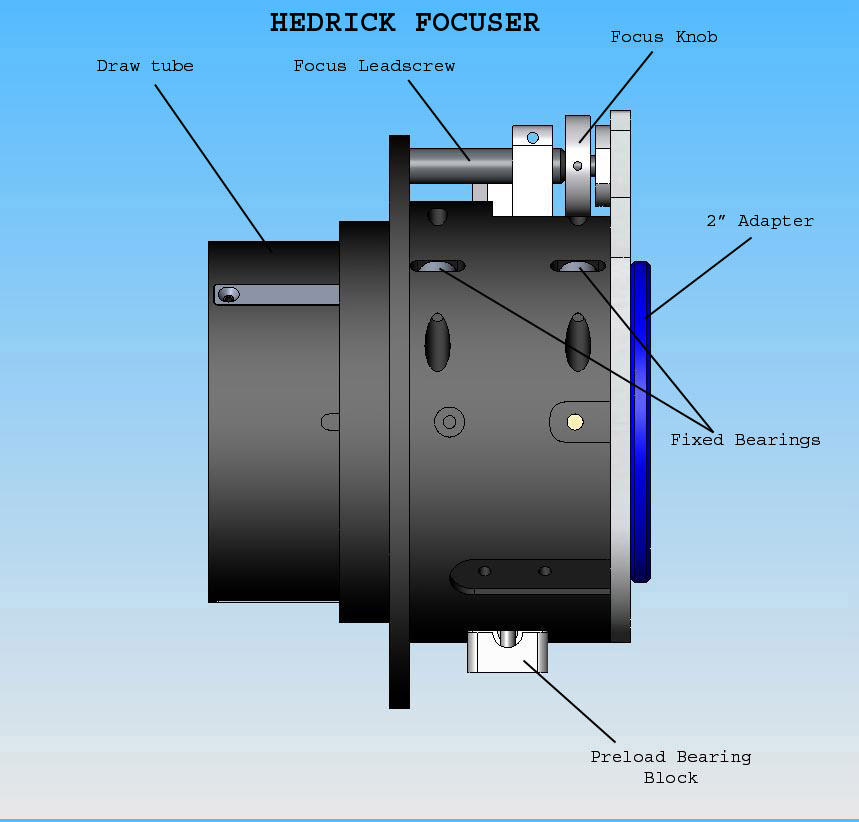
主镜
| 光学直径 | 318 毫米(12.5 英寸) |
| 外径 | 330 毫米(13 英寸) |
| 形状 | 长椭圆体 |
| 材料 | 精密退火熔融石英 |
| 涂层 | 增强铝 - 96% |
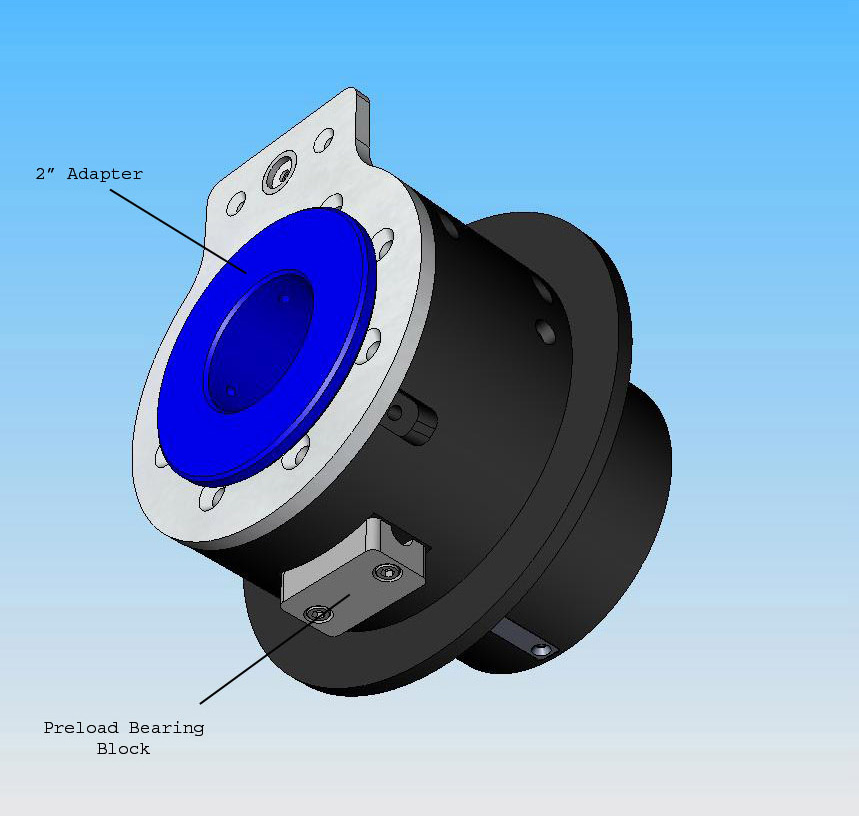
镜头组
| 直径 | 70 毫米(2.76 英寸) |
| 镜头数量 | 2 |
| 涂层 | 宽带增透膜(400 至 700nm 范围内反射率低于 0.5%) |
船运
| 板条箱运输重量 | 73.9公斤 |
| 板条箱宽度 | 559 毫米 |
| 板条箱高度 | 737 毫米 |
| 板条箱长度 | 1,219 毫米 |
包含的配件
| 2.75 英寸 Hedrick 电动调焦器 | 提供 1.3 英寸焦距电动 2.75 英寸 Hedrick 调焦器提供 1.3 英寸调焦行程,占用 3 英寸后焦距。需要单独出售的 125901 EFA 套件。 |
| 防结露加热元件 | 主镜和副镜上的加热垫需要单独出售的 600195 Delta-T 控制器 |
| OTA封面 | 保护主镜和光学管内部 |
| 闪存盘 | 包含主镜与次镜准直和间隔的软件和说明 |
| 风扇电源线连接器 | 如果用户没有 125901 EFA 套件,则提供为风扇供电的连接方法。用户必须提供 12VDC 电源 2.1 筒形插孔连接器(中心正极)。 |
$33,599.00
PlaneWave CDK 14 英寸熔融石英
CDK(校正 Dall-Kirkham)光学设计是一种创新的解决方案,以实惠的价格提供无与伦比的天文成像质量。CDK 望远镜设计使用大尺寸 CCD 相机提供出色的成像效果,同时仍保持出色的视觉使用效果。CDK 设计的离轴性能远远超过大多数商用望远镜设计,包括 Ritchey-Chrétien 设计。
熔融石英
熔融石英是一种纯度最高的合成非晶态石英玻璃,也是最透明的玻璃之一。
由于纯度高,熔融石英的光学和热学性质优于其他类型的玻璃。其透射率和均匀性均超过结晶石英,且不存在结晶形式固有的温度不稳定问题。
熔融石英的热系数比硼硅酸盐玻璃低六倍,这意味着熔融石英在冷却时能够保持其形状,精度很高。这意味着在温度变化时,其光学性能始终如一,焦点也始终如一。
熔融石英具有较高的熔化温度(约 1,600 摄氏度)、极低的热膨胀系数和抗热冲击性,是专业天文台以及各种科学应用的首选材料。
这种毫不妥协的设计是独一无二的,它使光学对准变得容易,准直变得非常简单。这保证了用户从望远镜中获得最佳性能。CDK 设计的图像平面的最终结果是没有离轴彗差、没有离轴散光、完全平坦的视场(没有离轴散焦)。CDK 设计将让您从视场的中心到角落精确地找到星星。
特征:
|
碳纤维桁架设计 |
采用碳纤维框架的开放式桁架管设计可最大限度地减少热膨胀,从而避免因温度变化而导致焦点偏移。碳纤维桁架设计还可促进快速热冷却,并提供坚固、轻巧的结构。 | |
| 3D 打印挡板 | Planewave 使用数字 3D 打印技术生产轻质挡板管。3D 打印机添加连续的材料层来构建挡板系统,并精确定位内部杂散光挡板,以最大限度地减少渐晕并最大限度地提高图像对比度。 | |
| 燕尾伸缩接头 | 考虑到碳纤维和铝之间的热膨胀差异。伸缩接头允许铝制燕尾榫膨胀和收缩,而不会对碳纤维下桁架造成压力。 | |
| 冷却风扇 | 三个冷却风扇将空气吹入望远镜后部。内部导流片使镜子后面的气流循环,实现均匀冷却,帮助望远镜快速达到热平衡。风扇由 PWI PC 软件和可选电子调焦附件 (EFA Kit) 控制。 | |
| Delta-T 就绪 | 为了增强防露效果,CDK14 内部连接有聚酰亚胺薄膜加热垫和温度传感器,可通过可选的Delta-T 控制器进行控制。 |
PlaneWave CDK 14 英寸熔融石英规格
光学系统
| 光学设计 | 修正的 Dall-Kirkham (CDK) |
| 光圈 | 14 英寸(356 毫米) |
| 焦距 | 2563 毫米(101 英寸) |
| 焦距比 | 光圈/7.2 |
| 中央阻塞 | 23.5% 按表面积计算;48.5% 按直径计算 |
| 安装表面后焦距 | 11.09 英寸(282 毫米) |
| 重量 | 48 磅(22 公斤) |
| OTA 长度 | 35 英寸(889 毫米) |
| 光学性能 | 离轴 13 毫米处为 3.1 微米 RMS;离轴 35 毫米处为 6.0 微米 RMS -点图 |
| 上笼 | 碳纤维桁架 |
| 下笼 | 碳纤维桁架和灯罩 |
| 最佳视野 | 70mm 成像圈 |
次镜
| 直径 | 165 毫米(6.5 英寸) |
| 材料 | 精密退火硼硅酸盐 |
| 形状 | 球形 |
| 涂层 | 增强铝 - 96% |
主镜
| 光学直径 | 14 英寸(355.6) |
| 外径 | 14.5 英寸(468.3 毫米) |
| 形状 | 长椭圆体 |
| 材料 | 熔融石英 |
| 涂层 | 增强铝 - 96% |
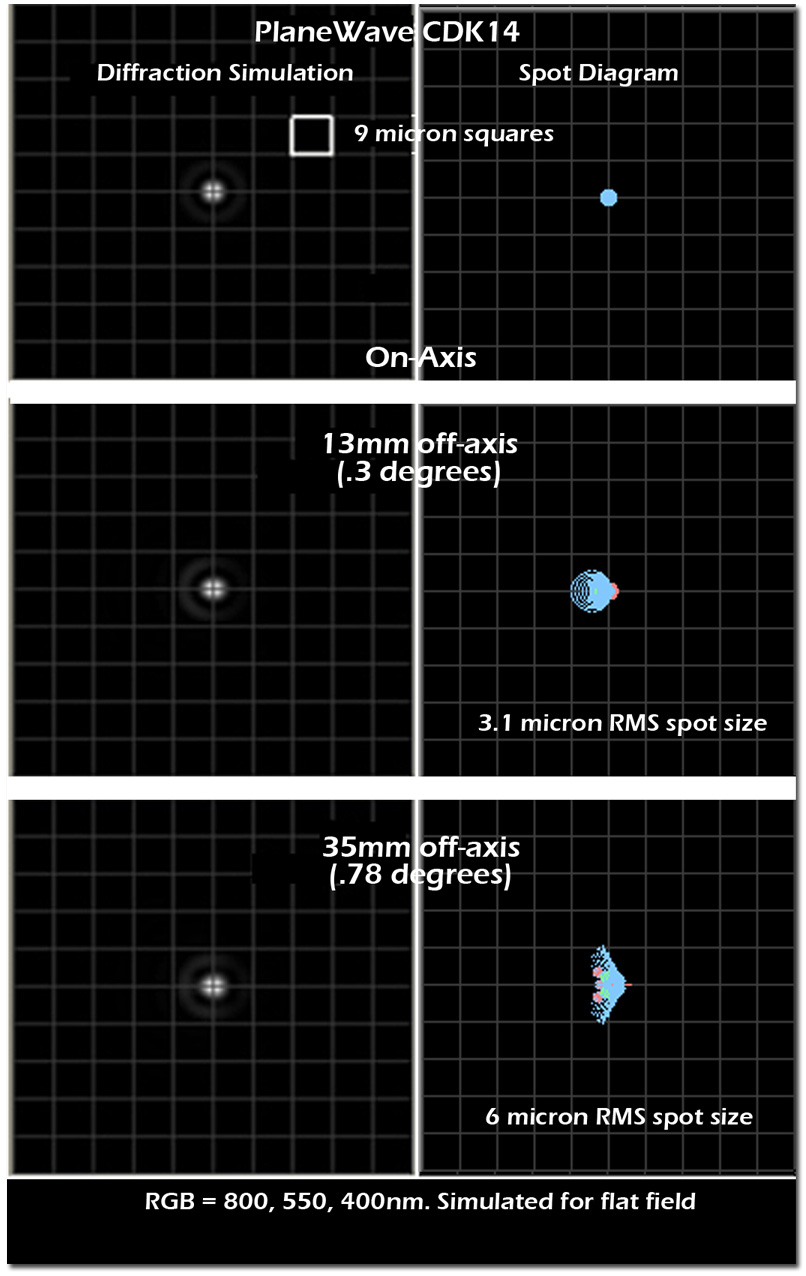
镜头组
| 直径 | 95 毫米(3.7 英寸) |
| 镜头数量 | 二 |
| 涂层 | 宽带增透膜(400 至 700nm 范围内反射率低于 0.5%) |
标准功能
| CDK 光学 | 校正的 Dall-Kirkham 设计可产生完美平坦的场,不存在离轴像散、彗形像差和离焦。 |
| 碳纤维桁架设计 | 最大限度地减少因温度变化而导致焦点偏移的热膨胀 |
| 燕尾伸缩接头 | 考虑到碳纤维和铝之间的热膨胀差异。伸缩接头允许铝制燕尾榫膨胀和收缩,而不会对碳纤维下桁架造成压力 |
| 冷却风扇 | 三个冷却风扇将空气吹入望远镜后部。这有助于望远镜快速达到热平衡。如果购买可选的电子调焦附件 (EFA 套件),风扇将由计算机控制。 |
| Delta-T 就绪 | 为了增强防露效果,CDK14 内部连接有聚酰亚胺薄膜加热垫和温度传感器,可通过可选的 Delta-T 控制器进行控制。 |
船运
| 板条箱运输重量 | 225磅 |
| 板条箱宽度 | 31英寸 |
| 板条箱高度 | 26英寸 |
| 板条箱长度 | 53英寸 |
注意:本产品的交货周期较长。如需更多信息,请联系education@bintel.com.au 。
Explore Related Collections
- Choosing a selection results in a full page refresh.
- Opens in a new window.