Welcome to The Binocular and Telescope Shop
Main menu
-
Telescopes
- Telescopes
-
Celestron Telescope
-
Smart Telescopes
-
Saxon Telescopes
-
Skywatcher Telescopes
-
TeleVue Telescopes
-
Planewave Telescopes
-
Vixen Telescopes
-
TEC Telescopes
-
BORG Telescopes
-
Founder Optics
-
Solar Astronomy
-
Binoculars
- Binoculars
-
Types of Binoculars
-
Vortex Binoculars
-
Nikon Binoculars
-
Swarovski Binoculars
-
Leica Binoculars
-
ZEISS Binoculars
-
Fujinon Binoculars
-
Gerber Binoculars
-
Vixen Binoculars
-
Pentax Binoculars
-
Olympus Binoculars
-
Kite Optics
-
Kowa Binoculars
-
GPO Binoculars
-
Zerotech Binoculars
-
Binocular Accessories
-
Spotting Scopes
- Spotting Scopes
-
ZEISS Spotting Scopes
-
Swarovski Spotting Scopes
-
Leica Spotting Scopes
-
Nikon Spotting Scopes
-
Vortex Spotting Scopes
-
Kowa Spotting Scopes
-
Pentax Spotting Scopes
-
Celestron Spotting Scopes
-
Spotting Scope Accessories
-
Microscopes
- Microscopes
-
Beaver Labs Microscopes
-
Celestron Microscopes
-
Digital Microscopes
-
Microscopes for Children
-
Biological Microscopes
-
Mounts & Tripods
- Mounts & Tripods
-
ZWO Mounts
-
Celestron EQ Mounts
-
iOptron Mounts
-
Vixen Mounts
-
Paramount EQ Mount
-
Saxon Mounts
-
PlaneWave Mounts
-
Skywatcher EQ Mounts
-
Losmandy EQ Mounts
-
Camera Tripods
-
Astro Star Tracker Mounts
-
Mount Accessories
-
Imaging
- Imaging
-
ZWO Cameras
-
QHY Cameras
-
Starlight Xpress
-
FLI Cameras
-
Atik Cameras
-
Pegasus Astro
-
Camera Lenses
-
SBIG Cameras
-
Focusing
-
Imaging Accessories
-
Filters (Imaging)
-
Autoguiding
-
Accessories
- Accessories
-
Eyepieces, Diagonals and Barlows
-
Adapters & Extensions
-
Books & Sky Guides
-
Bags, Cases & Covers
-
Cleaning and Maintanence
-
Collimation
-
Dew Control
-
Dovetail Bars & Plates
-
Filters (Visual)
-
Finderscopes
-
Tube Rings
-
Tele Vue Eyepieces
-
Bintel Eyepieces
-
Celestron Eyepieces
-
Vixen Eyepieces
-
Barlows & Powermates
-
Saxon Eyepieces
-
Eyepiece Kits
-
Diagonals
-
Tools
Your cart
Choose your Location
-
Bintel Glebe
Usually ready for pickup in 24 hours
Bintel 84 Wentworth park road, Glebe, 2073, NSW
Phone:(02) 9518 7255
Hours:
Monday9:30 am–5:30 pm
Tuesday9:30 am–5:30 pm
Wednesday9:30 am–5:30 pm
Thursday9:30 am–5:30 pm
Friday9:30 am–5:30 pm
Saturday9:30 am–4 pm
SundayClosed
Email subscriber Discount collection
1788 products
1788 products
Sort by:
- Featured
- Most relevant
- Best selling
- Alphabetically, A-Z
- Alphabetically, Z-A
- Price, low to high
- Price, high to low
- Date, old to new
- Date, new to old
$3,499.00
saxon 9.7” LCD Phase Contrast Infinity Digital Microscope
The saxon 9.7” LCD Phase Contrast Infinity Digital Microscope
combines cutting-edge technology and convenience, featuring a built-in 5-million-pixel camera and advanced optical performance. Ideal for professional and educational applications, this microscope offers precision, versatility, and durability at an affordable price.
Key Features:
- Magnification: Optical 10x, 100x, 400x, 1000x
- Coarse & Fine Focusing: Ensures detailed observation.
- Siedentopf Trinocular Head: 30° inclined tubes and diopter adjustments.
- Infinity Objectives: 4x/0.10, 10x/0.25, S40x/0.65, S100x/1.25 oil
- Condenser for bright field: Adjustable Abbe N.A. 1.25 condenser for brightfield microscopy.
- Illumination: In-built adjustable brightness 3W LED Light
Applications:
- Biological research
- Industrial inspection
- Educational purposes in schools and universities.
This model is designed for professionals and enthusiasts seeking high performance, ease of use, and durability in a digital microscope.
| Warranty Information | 3-Years Limited Warranty |
|---|---|
| Eyepiece | WF 10x/ 22mm |
| Magnification Range | Optical 10x, 100x, 400x, 1000x, Screen 20x-500x |
| Objectives | 4x, 10x, 40xR & 100xR |
| Field of View | 22mm |
| Working Distance | 4x @ 20.49mm, 10x @ 14.51mm, 40x @ 0.24mm, 100x @ 0.15mm |
| Illumination | LED |
| Head Type | Trinocular |
| Focus | Coarse and Fine, Coaxial |
| Condenser | 1.25 Abbe |
| Stage Type | Fixed with Attached Mechanical Slide Holder (216mm x 150mm) |
| Stand | Arm |
| Power Supply | 100~265V |
$3,499.00
saxon Polarizing Rotating Stage Microscope 40x-630x
The saxon Polarizing Rotating Stage Microscope is a cost-effective trinocular polarizing microscope ideal for specialized applications. Equipped with an integrated Bertrand Lens, four strain-free plan objectives, and one WF 10x/18mm eyepiece with 0.1mm cross micrometer crosshair scale.
Key Features:
- Magnification: 10x, 100x, 400x, 630x
- Coarse & Fine Focusing: Ensures detailed observation.
- Circular Stage and Bertrand Lens: Facilitate the observation and analysis of birefringent materials.
- Illumination: In-built adjustable brightness LED Light
Applications:
- Forensic Science: Identifying trace evidence like fibers, hairs, glass, and paint.
- Gout Diagnosis: Examining synovial fluid to identify urate crystals that cause gout.
- Material Analysis: Measuring the birefringence of materials that transmit light.
The saxon Polarizing Rotating Stage Microscope is an indispensable equipment for industrial and research professionals seeking precise and efficient material analysis.
| Warranty Information | 3-Years Limited Warranty |
|---|---|
| Eyepiece | Plan-scope WF 10x with 0.1mm cross micrometer |
| Magnification Range | 40x, 100x, 400x, 630x |
| Objectives | 4x, 10x, 40x, 63x |
| Field of View | 18mm |
| Working Distance | 30mm |
| Illumination | 3W LED |
| Head Type | Trinocular |
| Focus | Coarse and Fine, Coaxial |
| Condenser | 1.25 Abbe |
| Stage Type | 360 degree rotatable and graduated 1 degree increment |
| Stand | Curved Arm |
| Power Supply | 250v 10A Power cord |
$1,799.00
saxon Metallurgical Inverted Industrial Microscope 100x-1250x
The saxon Metallurgical Inverted Industrial Microscope is specifically designed for the precision examination of metallic and industrial samples. With a powerful magnification range of 100x to 1250x, it delivers detailed insights into microstructures and surface features.
Key Features:
- Magnification: 100x/ 125x/ 200x/ 250x/ 400x/ 500x/ 1000x/ 1250x for high-detail observations
- Inverted Design: Ideal for large or mounted samples
- Illumination: In-built adjustable brightness LED Light
Applications:
- Material Analysis: Study grain structures, coatings, and inclusions
- Industrial Use: Perform quality control and failure analysis
- Research: Advance metallurgy and material science studies
The saxon Metallurgical Inverted Industrial Microscope is an indispensable equipment for industrial and research professionals seeking precise and efficient material analysis.
| Warranty Information | 3-Years Limited Warranty |
|---|---|
| Eyepiece | Plan-scope WF 12.5x & WF 10x with 0.1mm cross micrometer |
| Magnification Range | 100x, 125x, 200x, 250x, 400x, 500x, 1000x, 1250x |
| Objectives | 10x, 20x, 100xR & 40xR Metallurgical Plan Scope Achromatic |
| Field of View | 18mm |
| Working Distance | 25mm |
| Illumination | 3W LED |
| Head Type | Inverted Binoculars |
| Focus | Coarse and Fine, Coaxial |
| Condenser | N/A |
| Stage Type | Fixed with Attached Mechanical Slide Holder (200mm x 180mm) |
| Stand | Inverted |
| Power Supply | 250v 10A Power cord |
$1,149.00
saxon SmartOne Pro WiFi Stereo Microscope 10x-80x
The SmartOne Stereo Pro WiFi Microscope is a versatile and high-performing optical instrument, ideal for hobbyists, educators, and professionals in fields such as repairers, electronics, and gemology. Designed for precision and ease of use, this microscope provides sharp, three-dimensional views of specimens for detailed examination.
Key Features:
- Magnification: 10x, 15x, 20x, 30x, 40x, 60x, 80x
- In-build WiFi Camera: This allows you to view the tiny details of the specimens through your phone and tablet.
- Binocular Viewing Head: Provides a comfortable, ergonomic experience during prolonged use.
- Objectives: Equipped with 1x, 2x, and 4x objectives for adjustable focus and clarity.
- Eyepieces: Includes 10x, 15x and 20x wide-field eyepieces for enhanced viewing flexibility.
- Stage: Comes with a Black/White Contrast Plate and a Frosted Glass Plate for enhanced sample visibility.
- Illumination: Bright and even LED illumination for detailed observation.
Applications:
- Education: Ideal for home schooling, schools, and universities.
- Industrial Use: Ideal for inspecting circuit boards, small parts, and precision engineering.
- Gemology & Hobbies: Perfect for jewelry inspection, coin collection, and crafting.
The saxon SmartOne Pro WiFi Stereo Microscope combines quality optics, a robust design, and ease of use, making it an excellent choice for both professionals and enthusiasts.
| Warranty Information | 3-Years Limited Warranty |
|---|---|
| Eyepiece | WF 10x / WF 15x / WF 20x |
| Magnification Range | 10x, 15x, 20x, 30x, 40x, 60x, 80x |
| Objectives | 1x 2x, 4x |
| Field of View | 20mm, 10mm & 5mm |
| Working Distance | 76mm |
| Illumination | LED Top Illumination 1W LED & Bottom Illumination 7*20mA LED |
| Head Type | Binoculars with In-build WiFi Camera |
| Focus | Yes |
| Condenser | N/A |
| Stage Type | Black/White Contrast Plate, Frosted Glass |
| Stand | Pillar with Handle |
| Power Supply | 5v 1000mA AC Power or 3x AA Batteries |
$114,599.00
RC20’s Key Features
Large Aperture and Ritchey-Chrétien Optics
The RC20 features a purely reflective Ritchey-Chrétien optical system, which includes high-quality mirrors with enhanced coatings. This setup minimizes chromatic aberration and ensures excellent light throughput, providing superb image fidelity and contrast. This optical design shines when making observations, primarily on-axis, and wide-field imaging is not a concern.
Mechanical Structure
Constructed from lightweight yet durable materials, including a dual carbon-fiber truss design, the 20-inch Ritchey-Chrétien ensures structural integrity and reduces the overall weight. This makes it easier to handle and mount on various telescope mounts.
Thermal Management
Equipped with three cooling fans at the back of the telescope, the RC20 achieves thermal equilibrium quickly. This feature helps to reduce air turbulence inside the telescope tube, minimizing thermal distortions and maintaining optimal imaging conditions.
Application-Specific Benefits
Astrophotography
The large aperture and precision optics of the 20-Inch Ritchey-Chrétien enable astrophotographers to capture detailed and crisp images of celestial phenomena, making it an excellent tool for capturing faint galaxies, nebulae, and star clusters.
Astronomy Research
With its reliable performance and detailed imaging capabilities, the 20-inch Ritchey-Chrétien is a valuable asset for universities and research observatories that engage in complex studies such as stellar classification, photometric research, and other scientific investigations.
Optical Systems
| Aperture | 508 mm (20") |
| Focal Length | 3556 mm (140") |
| Focal Ratio | f/7 |
| Central Obstruction | 39% of the Primary Mirror Diameter |
| Back Focus from Racked in Focuser | 147 mm (5.8") |
| Weight | 63.5 kg (140 lbs) |
| OTA Length | 1194 mm (47") |
| Upper Cage | Carbon Fiber Truss |
| Lower Cage | Carbon Fiber Truss with Carbon Fiber Light Shroud |
Secondary Mirro
| Diameter | 191mm (7.5") |
| Material | Fused silica |
| Shape | Hyperbolic |
| Coating | Enhanced Aluminum – 96% |
Primary Mirror
| Optical Diameter | 508 mm (20") |
| Outer Diameter | 521 mm (20.5") |
| Shape | Hyperbolic |
| Material | Enhanced Aluminum – 96% |
| Coating | Fused Silica |
| Included Items | Heating Elements for Dew Prevention - The heating pads on the primary and secondary mirror require the 600195 Delta-T controller sold separately |
| OTA Cover - To protect the primary mirror and inside of the optical tube | |
| Flashdrive - Contains software and instructions for collimation and spacing the primary to secondary mirror | |
| Wrench Set (5812A35) - Standard hex wrenches (European orders only) |
$2,640.00
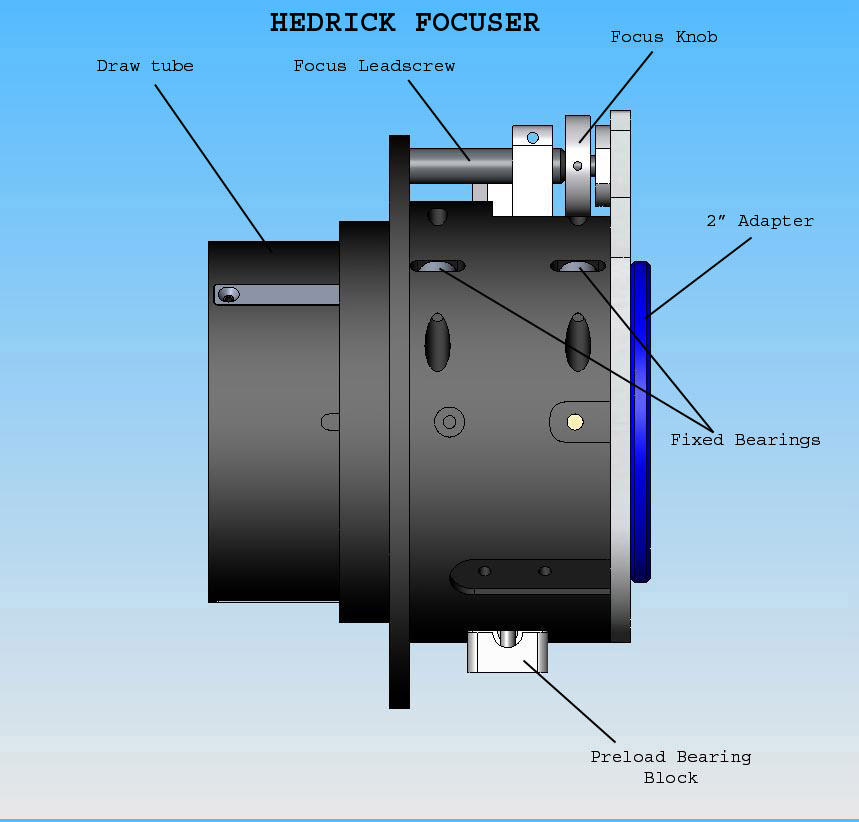
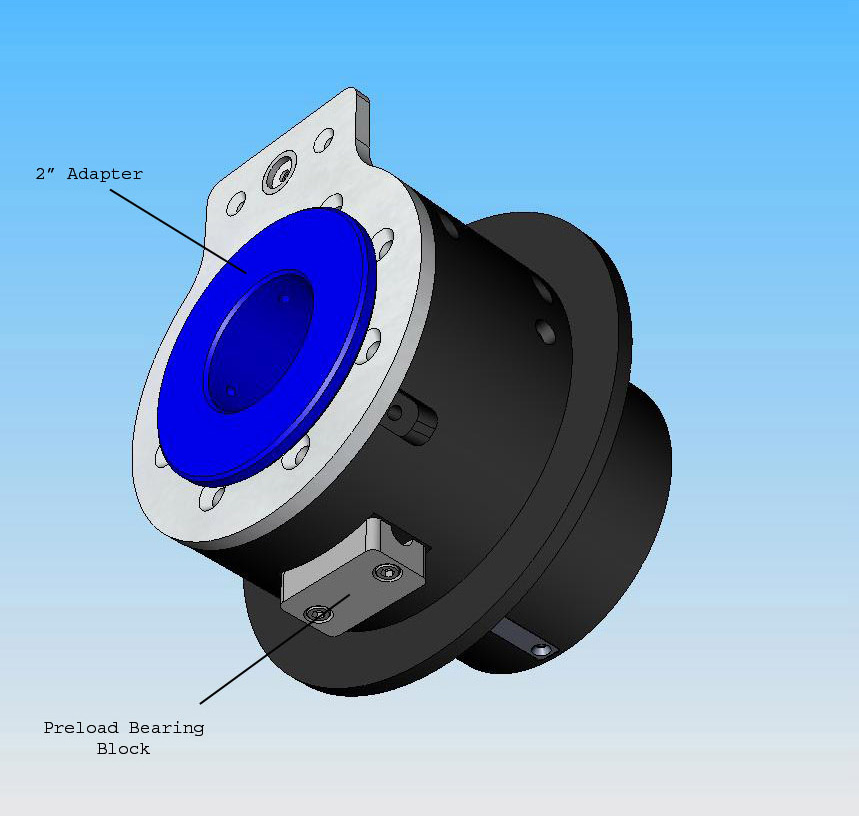
- The Hedrick focuser designed by PlaneWave is a heavy duty no-slip focuser capable of handling an imaging payload of up to 20lbs.
- Occupies 3″ of backfocus with the focuser fully racked in, and 4.2″ when fully racked out.
- Focuser travel range of 30mm (30000 microns/1.2″)
- The focus tube runs on 5 bearings and is driven by a leadscrew so there is no chance of slipping.
- Focus may be automated through a computer using PlaneWave’s EFA Kit and PWI3 software.
- The focuser comes with pre-installed motor that can be controlled with the EFA hand controller or PWI3 software.
$47,299.00
CDK17’s Key Features
Large Aperture and Moderate Focal Ratio
The CDK17 features a 432 mm aperture and an f/6.8 focal ratio. This combination enhances its capability to capture deep-sky objects with exceptional detail, offering excellent light-gathering efficiency and a broad field of view suitable for advanced research and high-quality imaging.
Advanced Optical Design
Equipped with a state-of-the-art Corrected Dall-Kirkham optical system, the CDK17 delivers outstanding image clarity. Its innovative design eliminates off-axis coma and astigmatism. It provides a perfectly flat field, ensuring images are sharp and detailed across the entire field of view with minimal need for post-processing.
Robust Mechanical Structure
Constructed with a carbon fiber optical tube, the CDK17 is lightweight and durable. Its design minimizes thermal expansion, ensuring minimal focus shift with temperature changes, making it ideal for extended observing sessions under varying environmental conditions.
High-Performance Mirrors and Coatings
Using fused silica mirrors, the CDK17 maintains precise optical alignment and surface accuracy, even amid temperature fluctuations. The high-quality coatings enhance light transmission and reduce stray light, optimizing performance for specialized observational tasks.
Thermal Management
The CDK17 is equipped with cooling fans and a Delta-T ready system to achieve thermal equilibrium swiftly. These features help to minimize air turbulence within the tube, thus reducing image distortion and maintaining consistent imaging quality.
Integrated Dew Control
The telescope incorporates advanced dew prevention technology with heater pads controlled by PlaneWave’s software. This ensures that optical surfaces remain clear of condensation during humid conditions, thus maintaining clear and consistent imaging performance.
Application-Specific Benefits
Astrophotography
With its large image circle and exceptional field flatness, the CDK17 allows astrophotographers to capture expansive and breathtaking views of the cosmos with incredible detail and clarity.
Astronomy Research
The precise and stable imaging capabilities of the CDK17 make it an invaluable tool for academic institutions and observatories engaged in complex astronomical research, including deep-sky surveys and detailed photometric studies.
Visual Observations
The CDK17 excels in visual observation, offering bright and crisp views ideal for star parties and serious visual astronomy. The telescope's superior optical quality provides stunning views of planetary, lunar, and deep-sky objects, making every viewing session a remarkable experience.
Space Situational Awareness (SSA) and Space Domain Awareness (SDA)
The CDK17 also lends itself to Space Situational Awareness and Space Domain Awareness applications. Its capability to provide detailed observations can be essential for tracking and monitoring satellites and other space debris, contributing valuable data for space traffic management and safety initiatives.
Optical Systems
| Aperture | 432mm (17 in) |
| Focal Length | 2939 |
| Focal Ratio | f/6,8 |
| Central Obstruction | 23.7% by surface area; 48.6% of the primary mirror diameter |
| Back Focus From Mounting Surface | 262.33mm (10.32 in) |
| Back Focus From Racked In Focuser | 184mm (7.24 in) |
| Weight | 48kg (106 lbs) |
| OTA Length | 1067mm (42 in) |
| Optical Design Performance | 6.5 micron rms at 21mm and 9.6 micron at 26mm off-axis |
| Upper Cage | Carbon Fiber Truss |
| Lower Cage | Carbon Fiber Truss and light shroud |
| Image Circle Size | 70mm |
Secondary Mirror
| Diameter | 165mm (6.5 in) |
| Material | Fused Silica (Quartz) |
| Shape | Spherical |
Lens Group
| Diameter | 105mm (4.13 in) |
| Coating | Broadband AR Coatings (less than .5% reflected from 400 to 700nm) |
Primary Mirror
| Optical Diameter | 432 mm (17 in) |
| Outer Diameter | 445 mm (17.5 in) |
| Shape | Prolate Ellipsoid |
| Material | Fused Silica (quartz) |
| Coating | Enhanced aluminum – 96% |
| Included Items | Heating Elements for Dew Prevention - The heating pads on the primary and secondary mirror require the 600195 Delta-T controller sold separately |
| OTA Cover - To protect the primary mirror and inside of the optical tube | |
| Flashdrive - Contains software and instructions for collimation and spacing the primary to secondary mirror |
$640.00
The Paramount ME II Dec Axis to Versa-Plate Spacer is mounted between the top of the Paramount ME II declination axis and the bottom of the Versa-Plate.
When the Versa-Plate is in the standard orientation (see the Paramount User Guide for details about Versa-Plate attachment options):
- A recessed channel in the top of the Dec axis provides sufficient space to route the standard through-the-mount cabling to the Instrument Panel that is attached to the Versa-Plate.
- This spacer can be used to separate the top of the Dec axis from the bottom of the Versa-Plate to make room for routing custom through-the-mount cables to the telescope.
This unit is included in the Multi OTA Mounting Kit
$3,520.00
Introducing the new members of iOptron strain wave gear mount family - AZ/EQ dual mount HAE29 and HAE29EC! These light weight, high payload little titans will deliver an astronomy experience like never before. Imagine a mount head weighing in at 8 lbs with a payload capability 29.7lbs, without needing a cumbersome counterweight or shaft. Applying iOptron’s multi-decade experience creating precision mounts, the HAE29 brings this vision to reality.
Utilizing state of the art strain wave gear technology for the both RA and DEC movement, the HAE29s deliver unparalleled weight to payload efficiency. Its black anodized all metal CNC machined body is not only appealing to the eye, it’s a rugged platform that will perform at the highest level for many years to come. Unique features such as an electronic friction brake and power down memory allow the mount safely stop and resume a GoTo slew or continue tracking even after an abrupt power loss (No need to realign and start from the beginning).
An HAE29 mount can be controlled by a computer, either via ASCOM/Commander for a Windows PC or a third party INDI driver for a MacOS software; a SmartPhone/Tablet via iOptron Commander Lite or an App like SkySafari; or a Raspberry Pi device via INDI driver.
Features
- Advanced strain wave gear system technology
- Payload capacity of 13.5 kg (29.7 lbs) with the mount weight of 3.7 kg (8.15 lbs, include dovetail saddle)
- CNC machined
- Unique friction brake on both RA and DEC to safely stop movement during a planned or unplanned power interruption
- 360 second gear period
- Go2Nova® hand controller with ~212,000 object database
- Customer cable management system ready
- Dual saddle (Vixen and Losmandy-D styles)
- Built in zero position search and locator
- Power down position and location memory
- Integrated ST-4 autoguiding port
- Built-in Wi-Fi (via hand controller)
- USB port for firmware upgrade and computer control
- Carrying case
- Two year warranty
Specifications
| Mount | Strain Wave Altazimuth/Equatorial Mount |
| RA gear system | Strain Wave Gear |
| DEC gear system | Strain Wave Gear |
| Reduction ratio | RA 480:1, DEC 360:1 |
| Payload w/o CW * | 29.7 lbs (13.5 kg) |
| Mount weight | 8.15 lbs (3.7 kg) with dovetail saddle |
| Payload/Mount weight | 3.65 |
| Payload with CW* | 40 lbs (18 kg) |
| Period | 360 second |
| Drive motor | Stepper motor |
| Structure Material | All metal, CNC machined |
| Exterior finish | Anodized black |
| Level indicator | Level bubble |
| Control system | GOTONOVA/Commander |
| Hand Controller | Go2Nova® 8409 with ~212,000 objects database |
| Tracking | Automatic |
| Maximum slew speed | 6º/sec |
| Power consumption | 0.6A(Tracking), 1A(GOTO) |
| Power | DC12V-5A (5.5/2.5mm DC plug) |
| AC adapter | 100V ~ 240V (included, indoor use only) |
| Cable management | Ready for DIY |
| Power off brake | Electronic friction brake |
| Power-down memory | Yes |
| Wi-Fi | Built-in |
| Communication port | Yes (Wi-Fi and USB, via HC) |
| Autoguide port | Yes (ST-4 compatible) |
| Firmware upgrade | Yes |
| Dovetail saddle | Vixen & Losmandy |
| Tripod | Optional |
| Counterweight Shaft | SS Φ20X200mm, 3/8"-16 thread (Optional) |
| Counterweight | 10 lbs (4.5kg)(Optional) |
| Operation temperature | -20ºC ~ 40ºC (hand controller -10ºC ~ 40ºC) |
| Warranty | Two year limited |
* 200mm, with payload center of gravity to the RA rotation axis. Or an OTA size of ~220mm.
$4,720.00
Introducing the new members of iOptron strain wave gear mount family - AZ/EQ dual mount HAE43 and HAE43EC! These light weight, compact, medium payload titans will deliver an astronomy experience like never before. Imagine a mount head weighing in at less than 13lbs with a payload capability 44lbs, without needing a cumbersome counterweight or shaft. Applying iOptron’s multi-decade experience creating precision mounts, the HAE43 brings this vision to reality.
Utilizing state of the art strain wave gear technology for the both RA and DEC movement, the HAE43s deliver unparalleled weight to payload efficiency. Its black anodized all metal CNC machined body is not only appealing to the eye, it’s a rugged platform that will perform at the highest level for many years to come. Unique features such as an electronic friction brake and power down memory allow the mount safely stop and resume a GoTo slew or continue tracking even after an abrupt power loss (No need to realign and start from the beginning).
An HAE43 mount can be controlled by a computer, either via ASCOM/Commander for a Windows PC or a third party INDI driver for a MacOS software; a SmartPhone/Tablet via iOptron Commander Lite or an App like SkySafari; or a Raspberry Pi device via INDI driver.
The HAE43EC features a high precision RA axis encoder that delivers incredible tracking accuracy, enough that many will choose to image “sans” guiding.
Features
- Advanced strain wave gear system technology
- Payload capacity of 20 kg (44 lbs) with the mount weight of 5.8 kg (12.8 lbs, include dovetail saddle)
- CNC machined
- Unique friction brake on both RA and DEC to safely stop movement during a planned or unplanned power interruption
- 270 second gear period
- Go2Nova® hand controller with ~212,000 object database
- Customer cable management system ready
- Dual saddle (Vixen and Losmandy-D styles)
- Built in zero position search and locator
- Power down position and location memory
- Integrated ST-4 autoguiding port
- Built-in Wi-Fi (via hand controller)
- USB port for firmware upgrade and computer control
- Aluminum carrying case
- Two year warranty
Specifications
| Mount | Strain Wave Altazimuth/Equatorial Mount |
| RA gear system | Strain Wave Gear |
| DEC gear system | Strain Wave Gear |
| Reduction ratio | RA 640:1, DEC 480:1 |
| Payload w/o CW * | 44 lbs (20 kg) |
| Mount weight | 12.8lbs (5.8kg) with dovetail saddle |
| Payload/Mount weight | 3.45 |
| Payload with CW* | 55 lbs (25kg) |
| Period | 270 second |
| Drive motor | Stepper motor |
| Structure Material | All metal, CNC machined |
| Exterior finish | Anodized black |
| Polar Scope | Optional iPolar electronic polar scope |
| Level indicator | Level bubble |
| Control system | GOTONOVA/Commander |
| Hand Controller | Go2Nova® 8409 with ~212,000 objects database |
| Tracking | Automatic |
| Maximum slew speed | 6º/sec |
| Power consumption | 0.7A(Tracking), 1.2A(GOTO) |
| Power | DC12V-5A (5.5/2.5mm DC plug) |
| AC adapter | 100V ~ 240V (included, indoor use only) |
| Cable management | Ready for DIY |
| Power off brake | Electronic friction brake |
| Power-down memory | Yes |
| Wi-Fi | Built-in |
| Communication port | Yes (Wi-Fi and USB, via HC) |
| Autoguide port | Yes (ST-4 compatible) |
| Firmware upgrade | Yes |
| Dovetail saddle | Vixen & Losmandy |
| Tripod | Optional |
| Counterweight Shaft | SS Φ20X200mm, 3/8"-16 thread (Optional) |
| Counterweight | 10 lbs (4.5kg)(Optional) |
| Operation temperature | -20ºC ~ 40ºC (hand controller -10ºC ~ 40ºC) |
| Warranty | Two year limited |
* 200mm, with payload center of gravity to the RA rotation axis. Or an OTA size of ~220mm.
Multiple Readout Modes
Multiple Readout Modes are special for QHY 16-bit Cameras (QHY600/268/461/411). Different readout modes have different driver timing, etc., and result in different performance. See details at “Multiple Readout Modes and Curves” Part.
Random change thermal noise suppression function
You may find some types of thermal noise can change with time in some back-illuminated CMOS cameras. This thermal noises has the characteristic of the fixed position of typical thermal noise, but the value is not related to the exposure time. Instead, each frame appears to have its own characteristics. The QHY600/268/461/411 use an innovative suppression technology that can significantly reduce the apparent level of such noise.
UVLO Protection
UVLO(Under Voltage Locking) is to protect the electronic device from damage caused by abnormally low voltages.
Our daily life experience tells us that the actual operational voltage of an electrical device must not significantly exceed the rated voltage, otherwise it will be damaged. For such precision equipment as cameras, long-term work at too low input voltage can also be detrimental to the working life of the camera, and may even make some devices, such as power manager, burn up due to long-term overload. In the all-in-one driver and SDK after 2021.10.23 stable version, the camera will give a warning when the input voltage of the camera is below 11V.
Optimizing USB Traffic to Minimize Horizontal Banding
It is common behavior for a CMOS sensor to contain some horizontal banding. Normally, random horizontal banding can be removed with multiple frame stacking so it does not affect the final image. However, periodic horizontal banding is not removed with stacking so it may appear in the final image. By adjust the USB traffic in Single Frame mode or Live Frame mode, you can adjust the frequency of the CMOS sensor driver and it can optimize the horizontal banding appeared on the image. This optimized is very effective to remove the periodic banding in some conditions.
A typical Periodic Horizontal Noise under certain USB_TRAFFIC values.
After Adjusting the USB Traffic to avoid the periodic horizontal noise.
Reboot the camera by power off and on
The camera is designed to use the +12V to reboot the camera without disconnecting and reconnecting the USB interface. This means that you can reboot the camera simply by shutting down the +12V and then powering it back on. This feature is very handy for remote controlling the camera in an observatory. You can use a remotely controlled power supply to reboot the camera. There is no need to consider how to reconnect the USB in the case of remote control.
Specifications
| Model | QHY461PH |
| Image Sensor | SONY IMX461 BSI CMOS Sensor |
| Pixel Size | 3.76um x 3.76um |
| Color / Mono Version | Mono Only |
| Image Resolution | 11760 × 8896 |
| Effective Pixels | 102 Megapixels |
| Effective Image Area | 44mm x 33mm |
| Sensor Surface Glass | AR+AR Multi-Coating Clear Glass |
| Full Well Capacity (1×1, 2×2, 3×3) | 50ke- / 200ke- / 450ke- in Standard Mode 80ke- / 320ke- / 720ke- in Extend Full Well Mode |
| A/D | 16-bit (0-65535 greyscale) for 1X1Binning18bit in 2X2 19BIT in 3X3 20BIT in 4*4 software Binning |
| Sensor Size | TYPICAL 3.4inch |
| Read Noise | 1e to 3.7e (in HGC mode) |
| Dark Current | Approx 0.003e/pixel/sec @ -20C |
| Exposure Time Range | 50us – 3600sec |
| Frame Rate | 2.7FPS @ 8BIT 1.3FPS@16BIT on USB3.0 2.7FPS @ 16BIT 6FPS @ 14BIT on 10Gigabit Fiber |
| Shutter Type | Electric Rolling Shutter |
| Computer Interface | USB3.0 |
| Filter Wheel Interface | 4PIN QHYCCD CFW Port |
| Built-in Image Buffer | 1GByte DDR3 Buffer |
| Cooling System | Dual Stage TEC cooler(-35C below ambient with air cooling). |
| Anti-Dew Heater | Yes |
| Telescope Interface | – |
| Optic Window Type | AR+AR High Quality Multi-Layer Anti-Reflection Coating |
| Back Focal Length | 32.5mm |
Camera Curves
$6,610.00
With the advantage of low readout noise and high-speed readout, CMOS technology has revolutionized astronomical imaging. A monochrome, back-illuminated, high-sensitivity, astronomical imaging camera is the ideal choice for astro-imagers. The QHY600M-L uses the latest SONY back-illuminated sensor, the IMX455, a full frame (35mm format) sensor with 3.76um pixels and native 16-bit A/D. This sensor is available in both monochrome and color versions. The QHY600 ends the days of non-16bit CMOS cameras and it ends the days non-full frame (and larger) monochrome CMOS cameras.
The QHY600M-L has extremely low dark current (0.002e/p/s@-20C) using SONY’s Exmor BSI CMOS technology. QHY600M-L is also a zero amplifer glow camera. The QHY600M-L has only one electron of read noise at high gain and full resolution and 4FPS readout speed. One electron of read noise means the camera can achieve a SNR>3 at only 4 to 6 photons. This is perfect performance when conditions are photon limited, i.e., short exposures, narrow band imaging, etc., making this large area sensor ideal for sky surveys, time domain astronomy, fluorescence imaging, DNA sequencing and microscopy.
Models
QHY600 Series have mutiple models which covers both photographic and scientific using. Below list different types of QHY600 PH (photographic) series:
QHY600PH : Standard version for amateur astrographers;
2GB DDR3 image buffer
In order to provide smooth uninterrupted data transfer of the entire 60MP sensor at high speed, the QHY600 has 2GB DDR3 image buffer. The pixel count of the latest generation of CMOS sensors is very high resulting in greater memory requirements for temporary and permanent storage. For example, the QHY600 sensor produces about 120MB of data per frame. The data band-width is also increased from the original 16-bits to the current 32-bits. Transferring such a large file sizes necessarily requires the camera to have sufficient memory. The QHY600 has adopted a large-capacity memory of up to 2GB. Data throughput is doubled. This large image buffer meets the needs of high-speed image acquisition and transmission of the new generation of CMOS, making shooting of multiple frames smoother and less stuttered, further reducing the pressure on the computer CPU.
Another advantage is that when using some computers that do not have fast processors or have poor support for USB 3.0, the computer can’t transfer high-speed data well, and the data is often lost. The DDR can buffer a lot of image data and send it to the computer. Even if the USB 3.0 transmission frequently gets suspended, it will ensure that data is not lost. There are options in SharpCap to turn DDR buffering on or off. The current version of the ASCOM driver works in DDR mode.
Native 16 bit A/D: The new Sony sensor has native 16-bit A/D on-chip. The output is real 16-bits with 65536 levels. Compared to 12-bit and 14-bit A/D, a 16-bit A/D yields higher sample resolution and the system gain will be less than 1e-/ADU with no sample error noise and very low read noise.
BSI: One benefit of the back-illuminated CMOS structure is improved full well capacity. This is particularly helpful for sensors with small pixels. In a typical front-illuminated sensor, photons from the target entering the photosensitive layer of the sensor must first pass through the metal wiring that is embedded just above the photosensitive layer. The wiring structure reflects some of the photons and reduces the efficiency of the sensor. In the back- illuminated sensor the light is allowed to enter the photosensitive surface from the reverse side. In this case the sensor’s embedded wiring structure is below the photosensitive layer. As a result, more incoming photons strike the photosensitive layer and more electrons are generated and captured in the pixel well. This ratio of photon to electron production is called quantum efficiency. The higher the quantum efficiency the more efficient the sensor is at converting photons to electrons and hence the more sensitive the sensor is to capturing an image of something dim.
Zero Amplify Glow: This is also a zero amplifer glow camera.
TRUE RAW Data: In the DSLR implementation there is a RAW image output, but typically it is not completely RAW. Some evidence of noise reduction and hot pixel removal is still visible on close inspection. This can have a negative effect on the image for astronomy such as the “star eater” effect. However, QHY Cameras offer TRUE RAW IMAGE OUTPUT and produces an image comprised of the original signal only, thereby maintaining the maximum flexibility for post-acquisition astronomical image processing programs and other scientific imaging applications.
Anti-Dew Technology: Based on almost 20-year cooled camera design experience, The QHY cooled camera has implemented the fully dew control solutions. The optic window has built-in dew heater and the chamber is protected from internal humidity condensation. An electric heating board for the chamber window can prevent the formation of dew and the sensor itself is kept dry with our silicon gel tube socket design for control of humidity within the sensor chamber.
Cooling: In addition to dual stage TE cooling, QHYCCD implements proprietary technology in hardware to control the dark current noise.
Multiple Readout Modes are special for QHY 16-bit Cameras (QHY600/268/461/411). Different readout modes have different driver timing, etc., and result in different performance. See details at “Multiple Readout Modes and Curves” Part.
You may find some types of thermal noise can change with time in some back-illuminated CMOS cameras. This thermal noises has the characteristic of the fixed position of typical thermal noise, but the value is not related to the exposure time. Instead, each frame appears to have its own characteristics. The QHY600/268/461/411 use an innovative suppression technology that can significantly reduce the apparent level of such noise.
UVLO(Under Voltage Locking) is to protect the electronic device from damage caused by abnormally low voltages.
Our daily life experience tells us that the actual operational voltage of an electrical device must not significantly exceed the rated voltage, otherwise it will be damaged. For such precision equipment as cameras, long-term work at too low input voltage can also be detrimental to the working life of the camera, and may even make some devices, such as power manager, burn up due to long-term overload. In the all-in-one driver and SDK after 2021.10.23 stable version, the camera will give a warning when the input voltage of the camera is below 11V.
It is common behavior for a CMOS sensor to contain some horizontal banding. Normally, random horizontal banding can be removed with multiple frame stacking so it does not affect the final image. However, periodic horizontal banding is not removed with stacking so it may appear in the final image. By adjust the USB traffic in Single Frame mode or Live Frame mode, you can adjust the frequency of the CMOS sensor driver and it can optimize the horizontal banding appeared on the image. This optimized is very effective to remove the periodic banding in some conditions.
A typical Periodic Horizontal Noise under certain USB_TRAFFIC values.
The camera is designed to use the +12V to reboot the camera without disconnecting and reconnecting the USB interface. This means that you can reboot the camera simply by shutting down the +12V and then powering it back on. This feature is very handy for remote controlling the camera in an observatory. You can use a remotely controlled power supply to reboot the camera. There is no need to consider how to reconnect the USB in the case of remote control.
Specifications
| Model |
QHY600PH (Photographic Version)
QHY600PH SBFL (Short Back Focal Length Version) QHY600PH L (Lite Version) |
| CMOS Sensor | SONY IMX455 |
| Mono/Color | Both Available (while Mono only with QHY600PH-L) |
| FSI/BSI | BSI |
| Pixel Size | 3.76um x 3.76um |
| Effective Pixel Area | 9576*6388
(9600*6422 with overscan and optically black area) |
| Effective Pixels | 61.17 Megapixels (effective area. |
| Sensor Size | Full Frame 36mm x 24mm |
| A/D Sample Depth
|
16-bit (0-65535 levels) at 1X1 binning
18-bit at 2X2, 19-bit at 3X3, 20-bit at 4X4 software binning *QHY600 uses the software digital binning for 2*2binning. With digital sum, 2*2binning will be four 16-bit summed then it is 18-bit. |
| Full Well Capacity (1×1, 2×2, 3×3) | Standard Mode >51ke- / >204ke- / >408ke- Super Full Well Mode >80ke- / >320ke- / >720ke- |
| Full Frame Rate | USB3.0 Port Image Transfer Speed
Full Frame Size: 4.0FPS (8-bit output) Full Frame Size: 2.5FPS (16-bit output) 7.2FPS at 9600×3194, 22.5FPS at 9600×1080, 28FPS at 9600×768, 47FPS at 9600×480, 160FPS at 9600×100, Fiber Port Image Transfer Speed (QHY600Pro only) Full Frame Size: 4.0FPS (16-bit output) |
| Readout Noise | 1.0e- to 3.7e- (Standard Mode) |
| Dark Current | 0.0022e-/p/s @ -20C 0.0046e-/p/s @ -10C |
| Exposure Time Range | 40us – 3600sec |
| Unity Gain* | 25 (Extended Full Well Mode) *
*With the improvement of the CMOS technology, the 16bit CMOS camera has been released, like QHY600/268/411/461. For these cameras, even in lowest gain it has beyond the requirement of unit gain (less than 1e/ADU due to sufficient samples) So you can directly set gain 0 as start. Please note QHY600/268C/411/461 has extend full well mode. In this mode you still need to find out the unit gain position. |
| Amp Control | Zero Amplifer Glow |
| Firmware/FPGA remote Upgrade | Supported. Via Camera USB Port |
| Shutter Type | Electric Rolling Shutter |
| Computer Interface | USB3.0 |
| Built-in Image Buffer | DDR3 memory
PH & PH SBFL ver.: 2GBytes |
| Hardware Frame Sequence Number | Supported |
| Cooling System | Dual Stage TEC cooler: – Long exposures (> 1 second) typically -35C below ambient – Short exposure (< 1second) high FPS, typically -30C below ambient(Test temperature +20°) |
| Optic Window Type | AR+AR High Quality Multi-Layer Anti-Reflection Coating |
| Anti-Dew Heater | Yes |
| Telescope Interface | M54/0.75 |
| Back Focal Length | QHY600PH&QHYPH-L: 17.5mm+6mm (±0.2)
QHY600SBFL: 14.5mm* *The BFL Consumed equals 12.5mm when connecting QHYCFW. About the defination of “BFL Comsumed” and our adapter system please view: https://www.qhyccd.com/adapters/ |
| Weigth | PH Version: 850g Lite Version: 790g |
| Power | 40W/100% 20W/50% 13.8W/0% |
Camera Curves
The curve shows absolute QE
With the advantage of low readout noise and high-speed readout, CMOS technology has revolutionized astronomical imaging. A monochrome, back-illuminated, high-sensitivity, astronomical imaging camera is the ideal choice for astro-imagers. The QHY600M-L uses the latest SONY back-illuminated sensor, the IMX455, a full frame (35mm format) sensor with 3.76um pixels and native 16-bit A/D. This sensor is available in both monochrome and color versions. The QHY600C-PH ends the days of non-16bit CMOS cameras and it ends the days non-full frame (and larger) monochrome CMOS cameras.
The QHY600C-PH has extremely low dark current (0.002e/p/s@-20C) using SONY’s Exmor BSI CMOS technology. QHY600C-PH is also a zero amplifer glow camera. The QHY600C-PH has only one electron of read noise at high gain and full resolution and 4FPS readout speed. One electron of read noise means the camera can achieve a SNR>3 at only 4 to 6 photons. This is perfect performance when conditions are photon limited, i.e., short exposures, narrow band imaging, etc., making this large area sensor ideal for sky surveys, time domain astronomy, fluorescence imaging, DNA sequencing and microscopy.
Models
QHY600 Series have mutiple models which covers both photographic and scientific using. Below list different types of QHY600 PH (photographic) series:
QHY600PH : Standard version for amateur astrographers;
2GB DDR3 image buffer
In order to provide smooth uninterrupted data transfer of the entire 60MP sensor at high speed, the QHY600 has 2GB DDR3 image buffer. The pixel count of the latest generation of CMOS sensors is very high resulting in greater memory requirements for temporary and permanent storage. For example, the QHY600 sensor produces about 120MB of data per frame. The data band-width is also increased from the original 16-bits to the current 32-bits. Transferring such a large file sizes necessarily requires the camera to have sufficient memory. The QHY600 has adopted a large-capacity memory of up to 2GB. Data throughput is doubled. This large image buffer meets the needs of high-speed image acquisition and transmission of the new generation of CMOS, making shooting of multiple frames smoother and less stuttered, further reducing the pressure on the computer CPU.
Another advantage is that when using some computers that do not have fast processors or have poor support for USB 3.0, the computer can’t transfer high-speed data well, and the data is often lost. The DDR can buffer a lot of image data and send it to the computer. Even if the USB 3.0 transmission frequently gets suspended, it will ensure that data is not lost. There are options in SharpCap to turn DDR buffering on or off. The current version of the ASCOM driver works in DDR mode.
Native 16 bit A/D: The new Sony sensor has native 16-bit A/D on-chip. The output is real 16-bits with 65536 levels. Compared to 12-bit and 14-bit A/D, a 16-bit A/D yields higher sample resolution and the system gain will be less than 1e-/ADU with no sample error noise and very low read noise.
BSI: One benefit of the back-illuminated CMOS structure is improved full well capacity. This is particularly helpful for sensors with small pixels. In a typical front-illuminated sensor, photons from the target entering the photosensitive layer of the sensor must first pass through the metal wiring that is embedded just above the photosensitive layer. The wiring structure reflects some of the photons and reduces the efficiency of the sensor. In the back- illuminated sensor the light is allowed to enter the photosensitive surface from the reverse side. In this case the sensor’s embedded wiring structure is below the photosensitive layer. As a result, more incoming photons strike the photosensitive layer and more electrons are generated and captured in the pixel well. This ratio of photon to electron production is called quantum efficiency. The higher the quantum efficiency the more efficient the sensor is at converting photons to electrons and hence the more sensitive the sensor is to capturing an image of something dim.
Zero Amplify Glow: This is also a zero amplifer glow camera.
TRUE RAW Data: In the DSLR implementation there is a RAW image output, but typically it is not completely RAW. Some evidence of noise reduction and hot pixel removal is still visible on close inspection. This can have a negative effect on the image for astronomy such as the “star eater” effect. However, QHY Cameras offer TRUE RAW IMAGE OUTPUT and produces an image comprised of the original signal only, thereby maintaining the maximum flexibility for post-acquisition astronomical image processing programs and other scientific imaging applications.
Anti-Dew Technology: Based on almost 20-year cooled camera design experience, The QHY cooled camera has implemented the fully dew control solutions. The optic window has built-in dew heater and the chamber is protected from internal humidity condensation. An electric heating board for the chamber window can prevent the formation of dew and the sensor itself is kept dry with our silicon gel tube socket design for control of humidity within the sensor chamber.
Cooling: In addition to dual stage TE cooling, QHYCCD implements proprietary technology in hardware to control the dark current noise.
Multiple Readout Modes are special for QHY 16-bit Cameras (QHY600/268/461/411). Different readout modes have different driver timing, etc., and result in different performance. See details at “Multiple Readout Modes and Curves” Part.
You may find some types of thermal noise can change with time in some back-illuminated CMOS cameras. This thermal noises has the characteristic of the fixed position of typical thermal noise, but the value is not related to the exposure time. Instead, each frame appears to have its own characteristics. The QHY600/268/461/411 use an innovative suppression technology that can significantly reduce the apparent level of such noise.
UVLO(Under Voltage Locking) is to protect the electronic device from damage caused by abnormally low voltages.
Our daily life experience tells us that the actual operational voltage of an electrical device must not significantly exceed the rated voltage, otherwise it will be damaged. For such precision equipment as cameras, long-term work at too low input voltage can also be detrimental to the working life of the camera, and may even make some devices, such as power manager, burn up due to long-term overload. In the all-in-one driver and SDK after 2021.10.23 stable version, the camera will give a warning when the input voltage of the camera is below 11V.
It is common behavior for a CMOS sensor to contain some horizontal banding. Normally, random horizontal banding can be removed with multiple frame stacking so it does not affect the final image. However, periodic horizontal banding is not removed with stacking so it may appear in the final image. By adjust the USB traffic in Single Frame mode or Live Frame mode, you can adjust the frequency of the CMOS sensor driver and it can optimize the horizontal banding appeared on the image. This optimized is very effective to remove the periodic banding in some conditions.
A typical Periodic Horizontal Noise under certain USB_TRAFFIC values.
The camera is designed to use the +12V to reboot the camera without disconnecting and reconnecting the USB interface. This means that you can reboot the camera simply by shutting down the +12V and then powering it back on. This feature is very handy for remote controlling the camera in an observatory. You can use a remotely controlled power supply to reboot the camera. There is no need to consider how to reconnect the USB in the case of remote control.
Specifications
| Model |
QHY600PH (Photographic Version)
QHY600PH SBFL (Short Back Focal Length Version) QHY600PH L (Lite Version) |
| CMOS Sensor | SONY IMX455 |
| Mono/Color | Both Available (while Mono only with QHY600PH-L) |
| FSI/BSI | BSI |
| Pixel Size | 3.76um x 3.76um |
| Effective Pixel Area | 9576*6388
(9600*6422 with overscan and optically black area) |
| Effective Pixels | 61.17 Megapixels (effective area. |
| Sensor Size | Full Frame 36mm x 24mm |
| A/D Sample Depth
|
16-bit (0-65535 levels) at 1X1 binning
18-bit at 2X2, 19-bit at 3X3, 20-bit at 4X4 software binning *QHY600 uses the software digital binning for 2*2binning. With digital sum, 2*2binning will be four 16-bit summed then it is 18-bit. |
| Full Well Capacity (1×1, 2×2, 3×3) | Standard Mode >51ke- / >204ke- / >408ke- Super Full Well Mode >80ke- / >320ke- / >720ke- |
| Full Frame Rate | USB3.0 Port Image Transfer Speed
Full Frame Size: 4.0FPS (8-bit output) Full Frame Size: 2.5FPS (16-bit output) 7.2FPS at 9600×3194, 22.5FPS at 9600×1080, 28FPS at 9600×768, 47FPS at 9600×480, 160FPS at 9600×100, Fiber Port Image Transfer Speed (QHY600Pro only) Full Frame Size: 4.0FPS (16-bit output) |
| Readout Noise | 1.0e- to 3.7e- (Standard Mode) |
| Dark Current | 0.0022e-/p/s @ -20C 0.0046e-/p/s @ -10C |
| Exposure Time Range | 40us – 3600sec |
| Unity Gain* | 25 (Extended Full Well Mode) *
*With the improvement of the CMOS technology, the 16bit CMOS camera has been released, like QHY600/268/411/461. For these cameras, even in lowest gain it has beyond the requirement of unit gain (less than 1e/ADU due to sufficient samples) So you can directly set gain 0 as start. Please note QHY600/268C/411/461 has extend full well mode. In this mode you still need to find out the unit gain position. |
| Amp Control | Zero Amplifer Glow |
| Firmware/FPGA remote Upgrade | Supported. Via Camera USB Port |
| Shutter Type | Electric Rolling Shutter |
| Computer Interface | USB3.0 |
| Built-in Image Buffer | DDR3 memory
PH & PH SBFL ver.: 2GBytes |
| Hardware Frame Sequence Number | Supported |
| Cooling System | Dual Stage TEC cooler: – Long exposures (> 1 second) typically -35C below ambient – Short exposure (< 1second) high FPS, typically -30C below ambient(Test temperature +20°) |
| Optic Window Type | AR+AR High Quality Multi-Layer Anti-Reflection Coating |
| Anti-Dew Heater | Yes |
| Telescope Interface | M54/0.75 |
| Back Focal Length | QHY600PH&QHYPH-L: 17.5mm+6mm (±0.2)
QHY600SBFL: 14.5mm* *The BFL Consumed equals 12.5mm when connecting QHYCFW. About the defination of “BFL Comsumed” and our adapter system please view: https://www.qhyccd.com/adapters/ |
| Weigth | PH Version: 850g Lite Version: 790g |
| Power | 40W/100% 20W/50% 13.8W/0% |
Camera Curves
The curve shows absolute QE
$899.00
The Lodestar utilises a very sensitive Sony ‘ExView’ CCD (the ICX829AK) with an array of 752 x 580 pixels in a ‘half-inch’ format. Although the chip is not cooled, it has a very low dark signal and very little readout noise, so it can be used to guide on faint stars that are beyond the reach of webcams and CMOS chip based guide cameras.
Specification
-
- CCD type: ICX829AK Sony Exview interline CCD with low dark current and vertical anti-blooming.
- CCD Full resolution Pixel data: Pixel size: 8.6uM x 8.3uM, Image format: 752 x 580 pixels
- CCD Image area: 6.4mm (Horizontal) x 4.75mm (Vertical).
- Colour filter grid array: YMCG secondary colour filters.
- CCD quality: Grade 1
- Spectral Response: QE max at 620nM (~65%), 35% at 400nM and 770nM.
- Readout Noise: Less than 15 electrons RMS – typically only 10 electrons.
- Full-well capacity: Greater than 50,000 e- (unbinned)
- Anti-blooming: Overload margin greater than 1000x.
- Dark current: Dark frame saturation time greater than 1 hour. Less than 0.1 electrons/second @ + 10C ambient.
- Data format: 16 bits.
- System gain: 0.9 electrons per ADU
- Computer Interface: Built-in USB 2.0 compatible interface.
- Image download time: Typically 0.2 seconds at full resolution using USB 2.0.
- Power requirements: USB powered.
- Cooling system: Ambient air cooling.
- Size: 32 x 72mm black anodised aluminium barrel with 25 x 0.75mm ‘C mount’ thread at the CCD window end & input/output plugs at rear.
- Weight: approx. 50g.
Here is a rear view of the guider:
$3,799.00
Specifications:
- CCD type: ICX814AQ (colour) Exview CCD with ultra low dark current and vertical anti-blooming.
- CCD Full resolution pixel data: Pixel size: 3.69uM x 3.69uM, Image format: 3388 x 2712 pixels
- CCD Image area: 12.49mm (Horizontal) x 9.99mm (Vertical).
- CCD quality: Grade 1 or better – No bad columns, no dead pixels, no more than 50 ‘hot’ pixels (saturated in <10 seconds).
- Spectral Response: QE max at 580nM (~77%), 50% roll-off at 360nM and 770nM.
- Readout Noise: Typically only 3 electrons RMS.
- Well depth – 15,000e
- System gain – 0.25e / ADU
- Image download time – 5 seconds in 1 x 1 binning mode
- Anti-blooming: Overload margin greater than 800x.
- Dark current: Less than 0.002 electrons/second @ – 10C CCD temperature.
- Data format: 16 bits.
- System gain: 0.25 electrons per ADU
- Computer Interface: Built-in USB 2.0 compatible interface.
- Power requirements: 115VAC / 240VAC @ 12VA, or 12VDC @ 900mA max.
- Cooling system: Regulated set-point cooling supply with thermoelectric cooler to give a minimum CCD temperature of approximately -40C below ambient.
- Size: 75 x 70mm black anodised aluminium barrel with 42mm ‘T2’ thread at the CCD window end & input/output plugs at rear. CCD alignment screws are provided for setting the chip parallel to the focal plane.
- Weight: approx. 450g
$1,499.00
- The Delta T controller is an optional accessory for dew prevention on CDK14 through CDK24 OTAs and the CDK700 system.
- CDK12.5 to CDK24 and CDK700 telescopes come with primary and secondary mirror dew heating pads (CDK700 adds tertiary mirror heating), which are ready to accept the Delta T controller.
- Controlled via PWI3 software for CDK12.5 through CDK24 OTAs (PWI2 for the CDK700).
The PlaneWave Delta T Control Box is an optional accessory for dew prevention on CDK12.5 through CDK24 OTAs and the CDK700 system. CDK12.5 to CDK24 and CDK700 telescopes come with primary and secondary mirror dew heating pads (CDK700 adds tertiary mirror heating), which are ready to accept the Delta-T controller. Controlled via PWI3 software for CDK12.5 through CDK24 OTAs (PWI2 for the CDK700).
With Delta T you can:
- Have Full Control of Primary and Secondary Heater using PlaneWave Interface (PWI3) Software.
- Monitor current temperature of primary mirror, secondary mirror and surrounding ambient temperature.
- Automatically maintains mirror temperature set point as outside temperature changes.
- Displays real time graph of all temperature sensors.
$650.00
Tube Rings come with the purchase of the APO200FL F/8, and the APO250FL F/8.8. Additional sets of Tube Rings are available for purchase.
TEC Tube Rings are extremely lightweight and durable, with a set of two rings for an APO200FL F/7 . The Tube Rings are CNC machined for clean edges with black anodized aluminum that is scratch resistant. They are outfitted with adjustable stainless-steel latches and are able to fit the TEC Dovetail Plates, Losmandy Plates, and AP Plates for secure mounting. Each Ring contains an upper base, an adjustable latch, and a lower base. The upper base of the Tube Rings also connects to the TEC Carry Handles for easy transport.
$31,599.00
Our largest portable refractor, the APO180FL F/7 allows the observer to delve deep into the beauty of space.
- The APO180FL F/7 features an oil-spaced apochromatic-triplet objective with a Fluorite (CaF2) middle element, resulting in color correction that is optimized for visual use and imaging. This oil-spaced triplet design in combination with multi-layer coatings on all surfaces of the objective ensure maximal light transmission.
- The objective is housed in an aluminum cell, providing for excellent thermoregulation properties while remaining lightweight and strong.
- The optical assembly sits in a lightweight aluminum tube that utilizes anti-reflective coating and sharp-edged baffles throughout the interior and forget about collimation – after the scope leaves TEC, no adjustment is required.
- Further, the crisp all white assembly projects the elegant, handcrafted quality that TEC is known for. Expect deep contrast and rich, natural color out of this compact and timeless design.
-
Each APO180FL F/7 comes equipped with a Starlight Instruments FTF#3545 Feather Touch Focuser that was designed in collaboration with TEC. This is Starlight Instruments’ largest rotating focuser with coarse and fine focusing 9:1 Planetary Reduction Assembly.
- The APO180FL F/7 can be fitted with to other focuser models by request. Please contact TEC to confirm whether the desired focuser will fit with the desired TEC model
- The 2” locking metal collet is insensitive to temperature fluctuations and holds loads with high precision and concentricity.
- It also comes equipped with a Focuser wheel for easy mount installation and direction.
- Available for purchase as a Binocular Telescope. This requires the purchase of 2 APO180FL F/7.
- Able to accommodate a wide variety of eyepieces and mounts.
In classic refractor fashion, the TEC APO180FL F/7 is a no compromise, no frills design that lets the wonders of nature speak for themselves. Please know that ALL PRICES AND AVAILABILITY ARE SUBJECT TO CHANGE.
Recommended Accessories;
- 12” Dovetail Plate and Carry Handle facilitate easy transportation and fit seamlessly with most mounts. The larger size fits effortlessly with our larger models.
- Precision adjustable Tube Rings.
- Focal Reducer Corrector converts the F/7 Ratio to F/6.2 with a 115mm back focus.
- 180mm Field Flattener prevents vignetting and ensures high quality imaging.
- 10×60 Baader Vario Finderscope with a TEC Finder Bracket and Base for Telescope mounting.
- 7×50 Vixen Finderscope with a TEC Finder Bracket and Base for Telescope mounting.
- Gutekunst Compact Atmospheric Dispersion Corrector (ADC).
Testing and Quality Assurance
TEC Telescopes go through rigorous testing to ensure top quality performance. Newtonian Rings are used throughout the glass production process and we then use an interferometer to correct any remaining imperfections. Every telescope is then tested vigorously to reach the most optimum Strehl ratio possible. Rest assured that your telescope has been optimized to be as optically perfect as possible. If the objective does not reach Yuri’s expectations, the telescope will not be shipped. As a strict policy, TEC will not release telescope test reports.
While the objectives are fine-tuned under interferometrical control to meet the highest optical standards, cosmetic imperfections may exist in the objective and the tube assembly. Please rest assured that any imperfection in the telescope has been determined not to affect the optical performance.
| Clear Aperture | 180 mm |
| Focal Length | 1260 mm |
| Focal Ratio | 7.0 |
| Resolution (Theoretical) | 0.66 arcsec |
| Dew Shield Diameter | 9.11″ / 231.5 mm |
| Tube Diameter | 7.56″ / 192 mm |
| Tube Length (Retracted) | 44.5″ / 1130 mm |
| Tube Length (Extended) | 53″ / 1346 mm |
| Focuser Tube Fully Extended | +3.5″ / 114 mm |
| Length in Working Position with the Focuser in Middle of Focusing Range | 56.1″ / 1425 mm |
| Dist. From Focuser End to Focal Plane (Back Focus) | 8.27″ / 210 mm +-1 |
| Center of Gravity from the Middle of the Wheel and 2.5 lbs / 1 kg load | 19.7″ / 500 mm |
| Center of Gravity from the Middle of the Wheel (Telescope Retracted) | 21.3″ / 540 mm |
| Tube weight | 36.5 lb / 16.5 kg |
| OTA Weight with Rings, Plate, Handle | 40 lbs / 18.2 kg |
$539.00
TEC Tube Rings are extremely lightweight and durable, with a set of two rings for an APO140FL F/7 weighing under 750g. The Tube Rings are CNC machined for clean edges with black anodized aluminum that is scratch resistant. They are outfitted with adjustable stainless-steel latches and are able to fit the TEC Dovetail Plates, Losmandy Plates, and AP Plates for secure mounting. Each Ring contains an upper base, an adjustable latch, and a lower base. The upper base of the Tube Rings also connects to the TEC Carry Handles for easy transport.
$24,990.00
An extension of the highly popular APO140FL, the APO160FL F/7 allows the observer to delve deeper into the beauty of space.
- The TEC APO160FL F/7 features an oil-spaced apochromatic-triplet objective with a Fluorite (CaF2) middle element, resulting in color correction that is optimized for visual use and imaging. This oil-spaced triplet design in combination with multi-layer coatings on all surfaces of the objective ensure maximal light transmission.
- The objective is housed in an aluminum cell, providing for excellent thermoregulation properties while remaining lightweight and strong.
- The optical assembly sits in a lightweight aluminum tube that utilizes anti-reflective coating and sharp-edged baffles throughout the interior and forget about collimation – after the scope leaves TEC, no adjustment is required.
- Further, the crisp all white assembly projects the elegant, handcrafted quality that TEC is known for. Expect deep contrast and rich, natural color out of this compact and timeless design.
-
Each APO160FL F/7 comes equipped with a Starlight Instruments FTF#3545 Feather Touch Focuser that was designed in collaboration with TEC. This is Starlight Instruments’ largest rotating focuser with coarse and fine focusing 9:1 Planetary Reduction Assembly.
- The APO160FL F/7 can be fitted with to other focuser models by request. Please contact TEC to confirm whether the desired focuser will fit with the desired TEC model.
- The 2” locking metal collet is insensitive to temperature fluctuations and holds loads with high precision and concentricity.
- It also comes equipped with a Focuser wheel for easy mount installation and direction.
- Available for purchase as a Binocular Telescope. This requires the purchase of 2 APO160FL F/7.
- Able to accommodate a wide variety of eyepieces and mounts.
In classic refractor fashion, the TEC APO160FL F/7 is a no compromise, no frills design that lets the wonders of nature speak for themselves.
Please know that ALL PRICES AND AVAILABILITY ARE SUBJECT TO CHANGE WITHOUT NOTICE
Recommended Accessories;
- Precision adjustable Tube Rings
- 12” Dovetail Plate and Carry Handle facilitate easy transportation and fit seamlessly with most mounts. The larger size fits effortlessly with our larger models.
- Focal Reducer Corrector converts the F/7 Ratio to F/6.2 with a 115mm back focus.
- 160mm Field Flattener with an 85mm back focus.
- 7×50 Vixen Finderscope with a TEC Finder Bracket and Base for Telescope mounting.
Testing and Quality Assurance
TEC Telescopes go through rigorous testing to ensure top quality performance. Newtonian Rings are used throughout the glass production process and TEC then use an interferometer to correct any remaining imperfections. Every telescope is then tested vigorously to reach the most optimum Strehl ratio possible. Rest assured that your telescope has been optimized to be as optically perfect as possible. If the objective does not reach TEC's expectations, the telescope will not be shipped. As a strict policy, TEC will not release telescope test reports.
While the objectives are fine-tuned under interferometrical control to meet the highest optical standards, cosmetic imperfections may exist in the objective and the tube assembly. Please rest assured that any imperfection in the telescope has been determined not to affect the optical performance.
| Clear Aperture | 160 mm |
| Focal Length | 1120 mm |
| Focal Ratio | 7.0 |
| Resolution (Theoretical) | 0.75 arc sec |
| Dew Shield Diameter | 7.91″ / 201 mm |
| Tube Diameter | 6.38″ / 162 mm |
| Tube Length (Retracted) | 39″ / 991 mm |
| Tube Length (Dew Shield Extended) | 47″ 1194 mm |
| Length Incl. Focuser Fully Extended | +3.5″ / 114 mm |
| Length in Working Position with the Focuser in Middle of Focusing Range | 50.7″ / 1288 mm |
| Dist. From Focuser End to Focal Plane (Back Focus) | 7.48″ / 190 mm +-1 |
| Center of Gravity from the Middle of the Wheel and 2.5 lbs / 1 kg load | 15.6″ / 396 mm |
| Center of Gravity from the Middle of the Wheel (Telescope Retracted) | 16.4″ / 417 mm |
| Telescope Weight | 27 lb / 12.3 kg |
| Weight Incl. Rings, Plate, Handle | 31 lbs / 14 kg |
$689.00
Light and durable, the TEC Compact Case will keep its cargo safe, while being easy to transport. Made in the USA and in coordination with Tenba, this nylon exterior case was built with the APO160FL in mind. Weighing only 6 lbs (2.2 kg), this case is a perfect addition to the observer’s arsenal. The exterior dimensions (40″ x 9″ x 9″) fits airline checked luggage dimensions and the interior (39″ x 8″ x 8″) gives the APO160FL a snug fit with enough extra space for accessories. The hard sides and nylon exterior protect your telescope from all manner of wind, rain, and abrasions. The zippered access pockets in the interior of the case allow for greater customization in the wall padding of the case. An adjustable shoulder strap and hand straps make carrying your telescope comfortable and easy. The TEC Compact Case can also be lifted from the lengthwise handles on either side and features a front pocket for extra storage.
BSI
One benefit of the back-illuminated CMOS structure is improved full well capacity. This is particularly helpful for sensors with small pixels like the QHY533 Colour. In a typical front-illuminated sensor, photons from the target entering the photosensitive layer of the sensor must first pass through the metal wiring that is embedded just above the photosensitive layer. The wiring structure reflects some of the photons and reduces the efficiency of the sensor.
In the back- illuminated sensor the light is allowed to enter the photosensitive surface from the reverse side. In this case the sensor’s embedded wiring structure is below the photosensitive layer. As a result, more incoming photons strike the photosensitive layer and more electrons are generated and captured in the pixel well. This ratio of photon to electron production is called quantum efficiency. The higher the quantum efficiency the more efficient the sensor is at converting photons to electrons and hence the more sensitive the sensor is to capturing an image of something dim.
TRUE RAW Data
In the DSLR implementation there is a RAW image output, but typically it is not completely RAW. Some evidence of noise reduction and hot pixel removal is still visible on close inspection. This can have a negative effect on the image for astronomy such as the “star eater” effect. However, QHY Cameras offer TRUE RAW IMAGE OUTPUT and produces an image comprised of the original signal only, thereby maintaining the maximum flexibility for post-acquisition astronomical image processing programs and other scientific imaging applications.
Based on almost 20-year cooled camera design experience, The QHY cooled camera has implemented the fully dew control solutions. The optic window has built-in dew heater and the chamber is protected from internal humidity condensation. An electric heating board for the chamber window can prevent the formation of dew and the sensor itself is kept dry with our silicon gel tube socket design for control of humidity within the sensor chamber.
In addition to dual stage TE cooling, QHYCCD implements proprietary technology in hardware to control the dark current noise.
Amplify Control
Compare last generation’s astrocam for beginners, like QHY183 or QHY 163, QHY533M has much better amplify control.
QHY533M Dark Frame, 300s
QHY183M Dark Frame, 300s
QHY533M Dark frame
600s, with highest gain (170) and strech–only very slight amplify can be detected at the corner.
| Model | QHY533M | QHY533C |
| COMS Sensor | SONY IMX533 M | SONY IMX533 C |
| Mono/Color | Mono | Color |
| FSI/BSI | BSI | |
| Pixel Size | 3.76um x 3.76um | |
| Effective Pixel Area | 3008*3028 (includes the optically black area and overscan area) | |
| Effective Pixels | 9MP | |
| Sensor Size | 1 inch | |
| A/D Sample Depth
|
Native 14-bit A/D | |
| Full Well Capacity (1×1, 2×2, 3×3) | 58ke- | |
| Full Frame Rate | USB3.0 Port: Full Resolution 26.5FPS @8BIT 20FPS @16BIT2160Lines 37FPS @8BIT 28.5FPS@16BIT1080Lines 71.5FPS @8BIT 55FPS @16BIT768Lines 97FPS @8BIT 76FPS @16BIT480Lines 152FPS @8BIT 117FPS @16BIT240Lines 280FPS @8BIT 215FPS@16BIT |
|
| Readout Noise | 1.3 to 3.4e- | |
| Dark Current | -20C,0.0005e- /pixel/sec | |
| Exposure Time Range | 30us-3600sec | |
| Unity Gain | 68 | |
| Shutter Type | Electronic Shutter | |
| Computer Interface | USB3.0 | |
| Built-in Image Buffer | 1Gbyte DDR3 Memory | |
| Cooling System | Two-stage TEC cooler
Less than 1S lower than ambient temperature -30C in continuous mode More than 1S continuous mode or lower than ambient temperature -35C in single frame mode (Test temperature +20°) |
|
| Optic Window Type | AR+AR High Quality Multi-Layer Anti-Reflection Coating | |
| Anti-Dew Heater | Yes | |
| Telescope Interface | – | Support M48 (with adapter) |
| Back Focal Length | Actual Back Focal Consumed: 14 mm (Combined with CFW)
Standard BFL: 17.5mm(±0.5) |
17mm |
| Weight | 845g | 845g |
$719.00
The ATIK LRGB 2" filter set consists of Luminance, Red, Green and blue filters, that have been designed for CCD cameras to image deep sky objects, galaxies and stars in their natural colour. Take advantage of our special offer. Get 50% off any filter set (or both filter sets), when you buy any Atik mono camera (with the exception of the Atik GP).
If a natural colour representation is what you want from you deep-sky imaging, an LRGB filter set should be your first choice. With OIII emission overlapping on the blue and green filters to allow high efficiency and natural colour imaging of all deep-sky objects. The gap between green and red filters serves to block out the light pollution line at 589nm and improves the colour of your images.
ATIK LRGB 2" Specifications
Transmission: Average 95%
Size: 2”
Coating Wavelength: 300-1050nm
Transmitted Wavefront RMS: λ/4
Parallelism (arcsec): 30s
| Filter | Transmission range | Transmission in Band | Transmission out of band |
| Luminance | 410-680nm | Average >95%, Minimum >90% | Maximum <1% Average <0.5% |
| Red | 600-680nm | Average >95%, Minimum >90% | Maximum <1% Average <0.5% |
| Green | 500-550nm | Average >95%, Minimum >90% | Maximum <1% Average <0.5% |
| Blue | 410-500nm | Average >95%, Minimum >90% | Maximum <1% Average <0.5% |
SKU: ATK-0164
$1,160.00
ATIK 36mm Narrowband Filter Set
The Atik 36mm Narrowband filter set is designed with a band pass of 7 nm to aid in capturing all a nebula’s photons while the vast majority of the broad band light pollution is stopped. The result is a much higher signal to noise revealing faint details in nebulas. The Narrow band filter set comprises of Hydrogen-Alpha (Ha), Sulphur (SII) and Oxygen (OIII). Take advantage of our special offer. Get 50% off any filter set (or both filter sets), when you buy any Atik mono camera (with the exception of the Atik GP).
The Atik Narrowband 36mm filter set is compatible with our filter wheels and allows astrophotographers to capture deep-sky objects in spectacular narrow band. This filter set is commonly used to image objects in the Hubble pallet.
Atik Narrowband 36mm Filter Set Specifications:
Bandwidth:
- SII 7nm
- Ha 7nm
- OIII 7nm
Peak Transmission: minimum 80%
CWL (centre of wavelength):
- Ha 656.3nm
- SII 671.6nm
- OIII 500.7nm
Size: 36mm unmounted
Transmitted Wavefront RMS: λ/4
Parallelism(arcsec): 30s
| Filter | Peak Transmission | Half Width | Transmission in Band | Transmission out of Band |
| Hydrogen Alpha | 656.3nm | 7nm | >80% | Maximum<0.3% Average 0.1% |
| Oxygen III | 500.7nm | 7nm | >80% | Maximum<0.3% Average 0.1% |
| Sulphur II | 671.6nm | 7nm | >80% | Maximum<0.3% Average 0.1% |
SKU: ATK0204
$549.00
The ATIK LRGB 36mm set consists of Luminance, Red, Green and blue filters, that have been designed for CCD cameras to image deep sky objects, galaxies and stars in their natural colour. Take advantage of our special offer. Get 50% off any filter set (or both filter sets), when you buy any Atik mono camera (with the exception of the Atik GP).
If a natural colour representation is what you want from you deep-sky imaging, an LRGB filter set should be your first choice. With OIII emission overlapping on the blue and green filters to allow high efficiency and natural colour imaging of all deep-sky objects. The gap between green and red filters serves to block out the light pollution line at 589nm and improves the colour of your images.
ATIK LRGB 36mm Set Specifications
Transmission: Average 95%
Size: 36mm
Coating Wavelength: 300-1050nm
Transmitted Wavefront RMS: λ/4
Parallelism (arcsec): 30s
| Filter | Transmission range | Transmission in Band | Transmission out of band |
| Luminance | 410-680nm | Average >95%, Minimum >90% | Maximum <1% Average <0.5% |
| Red | 600-680nm | Average >95%, Minimum >90% | Maximum <1% Average <0.5% |
| Green | 500-550nm | Average >95%, Minimum >90% | Maximum <1% Average <0.5% |
| Blue | 410-500nm | Average >95%, Minimum >90% | Maximum <1% Average <0.5% |
SKU: ATK0163
$2,559.00
Like their predecessors, the C261A3 is designed with portability in mind, weighing in at only 4.5kg it can support up to a 12kg payload an incredible 2.6 mount weight to payload ratio. The key to enable such ratios is the CEM design focuses the mount and payload weight directly on the center of the tripod rendering “natural stability”.
Building on the legacy of earlier CEM models we have added features for convenience and functionality. A positive lock gear engagement system (easy to use even when wearing gloves), Built-in Wi-Fi enabling unparallel connectivity and recordable permanent periodic error correction (PPEC) to repeat optimal PEC training sessions. Regarding functionality the C261A3 delivers precise pointing and accurate tracking. The CEM26 sets the new standard for compact equatorial mounts.
The center-balanced design mount puts the weight of the payload at the center of gravity allowing for greater natural stability. Other features include an adjustable counterweight bar to prevent obstruction with the tripod. And polar aligning is quick and accessible all the time since the polar scope is not blocked by the declination shaft.
The C261A3 is equipped with the latest advanced GOTONOVA® GOTO technology, making it one of the most powerful and accurate GOTO mounts available. Its database includes over 212,000+ objects. The Go2Nova® Hand Controller is intuitive to use and its large 4-line LCD screen simplifies the process of setting telescopes and locating objects.
The CEM26A mount has an integrated electronic polar finder scope known as the iPolar. This tool ensures the accurate alignment of a telescope, even when the pole star is obscured. It comes with a 1.5" heavy duty stainless steel tripod and an aluminum carrying case.
Shipping Box #1: C261A-CEM26 Head w/ iPolar/Tray (C261A)
Shipping Box #2: 8283-CEM26/GEM28 LiteRoc Tripod w/o Tray (C26/G28 LiteRoc)
Features
- Unique design, center-balanced equatorial mount (CEM) for maximum payload and minimum mount weight
- Ideal for both visual observation and astrophotography
- Low periodic error (< ± 10 arc seconds)
- Payload of 12 kg (26 lbs) with the mount-only weight of 4.5 kg (10 lbs)
- CNC machined and cast metal body
- Spring loaded gear system
- Large easy to use quick-lock gear clutches
- 0º latitude operation with optional adapter
- Stepper motor with low power consumption
- Integrated iOptron iPolarTM electronic polar scope
- Polar alignment routine for those who can’t see the Pole Star
- Go2Nova® 8409 controller with Advanced GOTONOVA® GOTO Technology
- Integrated ST-4 autoguiding port
- Built-in Wi-Fi
- USB port for firmware upgrade and computer control
- LiteRoc heavy-duty stainless steel tripod w/ vibration suppression pads (7.5kg)
- Die-cast metal tripod spreader with accessory tray
- Optional 32-channel Global Positioning System (GPS)
- Optional hard carrying case
- Optional iGuiderTM autoguiding system #3360
Supplied with an American power supply from factory
$7,349.00
|
|
Specs
| Mount | Center-balanced Equatorial Mount (CEM) |
| Payload* | 31.8kg (70 lbs), exclude counterweight |
| Mount weight | 13.6kg (30 lbs) |
| Payload/Mount weight ratio | 2.33 |
| Material | All metal |
| Latitude adjustment range | 0°~ 65° |
| Azimuth adjustment range | ± 4° |
| PE (by encoder)** | < 0.3 arcsec rms |
| Worm period | 348 sec |
| PEC | Realtime PEC (RPEC) |
| Right Ascension worm wheel | Φ151mm, 248 teeth |
| Declination worm wheel | Φ151mm, 248 teeth |
| Worm | Φ21.2mm |
| Right Ascension axle | Φ55mm, steel |
| Declination axle | Φ55mm, steel |
| Right Ascension bearings | Φ80mm |
| Declination bearings | Φ80mm |
| Counterweight shaft | Φ28x 415 mm (SS, 1.9kg) |
| Counterweight | 9.5 kg (20 lbs) x1 |
| Mount base size | Φ152mm |
| Motor drive | Precision stepper motor w/128 micro-step |
| Resolution | 0.07 arc seconds |
| Slew speed | 3.75°/sec (900x) max. |
| Hand Controller | Go2Nova® 8407+, 8 line 21 character LCD |
| Power requirement | DC 12V, 5A (5.5mm/2.5mm plug) |
| Power consumption | 0.6A(Tracking),0.8A(GOTO) |
| Polar Scope | Internal electronic polar scope, iPolar |
| Meridian treatment | Stop (0-10° pass), auto flip |
| Zero position | Automatic zero search |
| Park position | Horizontal, vertical, current, alt/azi input |
| Level indicator | YES |
| Dovetail saddle | 8" Losmandy D & Vixen |
| GPS | YES |
| Guiding port | ST-4 |
| Communication port | USB2.0 |
| Cable management | DC12V (3A),DC (5A), GUIDE,USB For NUC: DC 19V, LAN and USB |
| Operation temperature range | -10°C ~ +40°C |
| Hard case | YES |
| Pier/Tripod | Optional LiteRoc tripod (8023ACC) or pier |
| Warranty | Two year limited |
|
$429.00
Compact travel binoculars for sports, nature, the theatre or even the opera!
The Vixen APEX II Binoculars fold for additional space-savings
Bright and clear visibility with special coatings
Multi-coated on the front of the lens. In addition, the prisms use a phase coating that reduces halation and increases resolution, and a high reflection coating that increases image brightness. These coatings reduce light loss and provide bright and clear vision. It is especially effective in a dark theatre or at dusk.
Waterproof design and special rubber coatings are perfect for outdoor use
Waterproof design with inert nitrogen gas filling keeps your binoculars dry and prevents fogging. Safe even near water or in bad weather. It also has a special rubberized exterior that can withstand harsh outdoor use.
Soft mesh bag included
A soft case with high cushioning and breathability is included. Protects your binoculars without added bulk or weight.
Specifications
| Magnification | 10 times |
| Objective lens effective diameter | 28mm |
| Prism Material | BaK4 |
| Coating | Fully multi-coated, phase coating, high-reflection coating |
| Field of view | 5.0 degrees |
| Apparent field of view | 47.2 degrees |
| Field of view at 1000m | 87m |
| Exit pupil | 2.8mm |
| Eye relief | 12mm |
| Pupil distance | 35-70mm |
| Waterproof | Nitrogen gas filled |
| Dimensions | 10.7×6.7×4.3cm |
| Weight | 248g |
QHY5III174M uses a 1/1.2-inch, 2.3 Megapixel, SONY Exmore IMX174 CMOS sensor with global shutter. Available in both monochrome and color. The large sensor size is a great choice for solar imaging and the large pixel size and high QE makes it excellent for deep-sky imaging as well. Typical of all models in the QHY5III Series, this camera produces a high frame rate with the USB 3.0 interface, 138 frames per second at full resolution, up to 490 FPS at selected ROI.The QHY5-III series cameras are USB3 super-speed cameras and guiders. They can be used in a standard 1.25-inch eyepiece holder. All QHY5III series cameras come in a very small but powerful package!
Specifications QHY5III174M
| CMOS Sensor | Sony IMX174 |
| Color/Mono | Both |
| FSI/BSI | FSI |
| Pixel Size | 5.86um |
| Pixel Array | 1920*1200 |
| Effective Pixels | 2.3MP |
| Sensor Size | 1/1.2inch |
| Frame Rate @Full Frame | 138FPS |
| Frame rate @ROI readout | 262FPS@ 960*600490FPS@ 480*300 |
| Ful Well Capacity | 32ke- |
| A/D | 12bit |
| Computer Interface | USB3.0 |
| Non-volatile memory / On camera storage | Build-in total 512Kbytes Flash Memory. 100Kbytes user-accessible space |
| Guide Port | St4 |
| Telescope Interface | 1.25-inch, CS mount |
| Weight | 89g |
$25,999.00
PlaneWave CDK 12.5 Fused Silica
Capturing the most stunning astrophotographs possible is something our team is passionate about. From design to manufacture, our goal with the Corrected Dall-Kirkham (CDK) 12.5″ telescope was centered around performance and ease of use. The PlaneWave CDK 12.5 Fused Silica is an incredible breakthrough in telescope technology and produces no off-axis coma and no off-axis astigmatism. Additionally, the PlaneWave CDK 12.5 Fused Silica provides a perfectly flat field so your astrophotographs will have stunning clarity from corner to corner of the image without field curvature degrading the photos. Offering the simplicity of single-mirror collimation, the stray light control of advanced baffles, structural performance created through finite element analysis (FEA), and decades of telescope design experience, the CDK12.5 is an exceptional diffraction-limited telescope. CDK12.5 users can experience pinpoint stars edge-to-edge and a 70 x 70 arcminute field of view when using large camera sensors. When equipment fades into the background and simply performs, the astrophotography experience becomes even more fun and rewarding!
The PlaneWave CDK 12.5 Fused Silica is a 12.5 inch (0.32 m) f/8 Corrected Dall-Kirkham Astrograph telescope. The telescope has a closed carbon fiber tube, with 3 cooling fans ejecting air from the back of the telescope. The PlaneWave CDK 12.5 covers a 52 mm field of view without any field curvature, off-axis coma, or astigmatism. The instrument weight is 21kg and comes standard with the large capacity 2.75 inch Hedrick focuser.
| Carbon Fiber Tube Design | Minimizes thermal expansion which causes focus shift with changes in temperature |
| Dovetail expansion joint | Allows for the difference in thermal expansion between carbon fiber and aluminium. The expansion joint allows the aluminium dovetail expand and contract without stressing the carbon fiber lower truss |
| 2.75 inch Hedrick Focuser | Heavy duty no-slip focuser. The focus tube runs on 5 bearings and is driven by a leadscrew so there is no chance of slipping. Focus may be automated through a computer using PlaneWave's EFA Kit add-on. The draw tube travel is 1.3 inch. Image 1 Image 2 |
| Cooling Fans | Three fans blow out of the optical tube pulling air though the telescope and by the primary mirror. This helps the telescope to reach thermal equilibrium quickly. The fans are controlled by a switch on the optical tube or can be controlled by a computer if the optional Electronic Focus Accessory (EFA Kit) is purchased. |
Technology
The CDK Optical Design
The CDK
Optical Performance
Shown are two simulations showing the CDK’s stunning performance. The first is a diffraction simulation and the second is a spot diagram. In both simulations the small squares are 9×9 microns, about the size of a CCD pixel. In the diffraction simulation the star images on axis and off-axis are nearly identical. In the spot diagram 21mm off-axis the spot size is an incredible 6 microns RMS diameter. This means stars across a 52 mm image circle are going to be pinpoints as small as the atmospheric seeing will allow.
Both of the simulations take into consideration a flat field, which is a more accurate representation of how the optics would perform on a flat CCD camera chip. For visual use some amount of field curvature would be allowed since the eye is able to compensate for a curved field. The diffraction simulation was calculated at 585nm. The spot diagram was calculated at 720, 585, and 430nm. Many companies show spot diagrams in only one wavelength, but you cannot see the chromatic performance with only one wavelength.
Comparison: CDK vs. Ritchey Chrétien
The simulations shown compares the optical performance of the CDK design to the Ritchey Chrétien (RC) design. The Ritchey design was popularized as an astroimaging telescope due to its use in many professional
observatories. Although very difficult and expensive to manufacture and align, the Ritchey is successful in eliminating many of the problems that plague many other designs, namely off-axis coma. However the Ritchey does nothing to eliminate the damaging effects of off-axis astigmatism and field curvature.
The CDK design tackles the off-axis coma problem by integrating a pair of correcting lenses into a two mirror design. The beauty is that this design also corrects for astigmatism and field curvature. Because the lenses are relatively close to the focal plane (unlike the Schmidt corrector plate found in various Schmidt Cassegrain designs), and because these lenses work together as a doublet, there is no chromatic aberration. The CDK offers a wide aberration-free, flat field of view that allows the user to take full advantage of the very large imaging chip cameras in the market place today.
Having an aberration free telescope design means nothing if the optics cannot be aligned properly. Many Ritchey owners never get to take full advantage of their instrument’s performance because the Ritchey is very difficult to collimate. Aligning the hyperbolic secondary mirror’s optical axis to the optical axis of the primary mirror is critical in the Ritchey design, and the tolerances are unforgiving. The secondary mirror of the CDK design is spherical. It has no optical axis and so the centering tolerance of the CDK secondary mirror is comparatively huge. With the help of some very simple tools, the CDK user will be able to set the secondary spacing, collimate the optics and begin enjoying the full performance potential the instrument has to offer within a few minutes.
The drastic difference in performance between the CDK and the RC is apparent. The biggest component that degrades the off-axis performance of the RC is the defocus due to field curvature. In many diagrams shown by RC manufacturers, the diagrams look better than this because they are showing a curved field. This is fine for visual use because the eye can compensate for some amount of curvature of field. But CCD arrays are flat and so in order to evaluate the performance a spot diagrams and/or diffraction simulations requires a flat field as shown.
PlaneWave CDK 12.5 Specifications
OPTICAL SYSTEM
| Aperture | 318mm (12.5 inch) |
| Focal Length | 2541 mm (100.04 inch) |
| Focal ratio | f/8 |
| Central Obstruction | 42% of the Primary Mirror Diameter |
| Back Focus from Mounting Surface | 265mm (10.445 inch ) |
| Back Focus from Racked in Focuser | 183mm (7.2 inch) |
| OTA Length | 787mm (31 inch) |
| Optical Tube | Carbon Fiber |
| Dimensions | Overall Dimensions (PDF) |
| Weight (includes manual-focuser and dovetail) | 20.9 kg (46 lbs) |
| Weight (includes electronic-focuser and dovetail) | 22.0 kg (48.5 lbs) |
SECONDARY MIRROR
| Diameter | 118 mm (4.65 inch) |
| Material | Precision Annealed Fused Silica |
| Shape | Spherical |
| Coating | Enhanced Aluminium - 96% |
PRIMARY MIRROR
| Optical Diameter | 318 mm (12.5 inch) |
| Outer Diameter | 330 mm (13 inch) |
| Shape | Prolate Ellipsoid |
| Material | Precision Annealed Fused Silica |
| Coating | Enhanced Aluminium - 96% |
LENS GROUP
| Diameter | 70 mm (2.76 inch) |
| Number of lenses | 2 |
| Coating | Broadband AR Coatings (less than .5% reflected from 400 to 700nm) |
SHIPPING
| Crated Shipping Weight | 73.9 kg |
| Crate Width | 559 mm |
| Crate Height | 737 mm |
| Crate Length | 1,219 mm |
INCLUDED ACCESSORIES
| Motorized 2.75″ Hedrick Focuser | Offers 1.3″ of focusMotorized 2.75″ Hedrick Focuser Offers 1.3″ of focuser travel and takes up 3″ of backfocus. Requires the 125901 EFA kit sold separately. |
| Heating elements for dew prevention | The heating pads on the primary and secondary mirror require the 600195 Delta-T controller sold separately |
| OTA Cover | To protect the primary mirror and inside of the optical tube |
| Flashdrive | Contains software and instructions for collimation and spacing the primary to secondary mirror |
| Cable connector for fan power | Provides a connection method for powering for the fans if the user does not have the 125901 EFA kit. User must provide 12VDC power supply 2.1 barrel jack connector that is center positive. |
Showing 1620/1788
Explore Related Collections
- Choosing a selection results in a full page refresh.
- Opens in a new window.